
When adding a brooch to a suit, look at the tie and pocket square before choosing a spot. A patterned tie, a large pocket-square fold, and a broad brooch can all draw attention to the same small area. You can wear them together, but give each a different job: one supplies the strongest pattern, another repeats a color, and the brooch adds shape.
Start with the lapel you can actually see
The left lapel is a conventional starting point, as described in Louis Faglin's brooch guide, rather than a requirement for every outfit. Hold the closed brooch against the jacket while supporting it with your hand. Look at the entire outline: a petal or point hidden under the collar may make the piece harder to read.
Also check what is already there. A boutonnière, a pin required for an event, or a very narrow lapel may leave little room. Choosing the brooch instead of an optional decoration is often simpler than squeezing both into the same space. For a wedding or formal event, start with any instructions from the hosts.
Decide whether the tie or the brooch leads
If the tie has a strong stripe, large print, or bright color, try a brooch with a more contained palette. Black and gold-tone details, for example, can add a distinct shape without introducing several new colors. There is no need to match every small finish to the watch or cufflinks.
With a plain tie and shirt, a more decorative brooch has room to become the main detail. If you are wearing an open-collar shirt instead, look at how the collar falls with the jacket buttoned and unbuttoned. Leave the brooch's outline visible rather than tucking it into the gap between shirt and lapel.
Use the pocket square for contrast, not duplication
A plain, compact pocket-square fold is one option beside an ornate brooch. It gives the chest a different kind of detail: a straight edge rather than another cluster of curves or sparkle. If you prefer a patterned square, try repeating one color from the brooch instead of matching the whole design.
Compare the jacket with and without the square. Keep both if they remain distinct; leave the square out if its fold touches or hides part of the brooch. The useful test is the actual distance and shapes on your jacket, not a rule that these accessories must—or must never—be worn together.
Try a black-and-gold floral detail
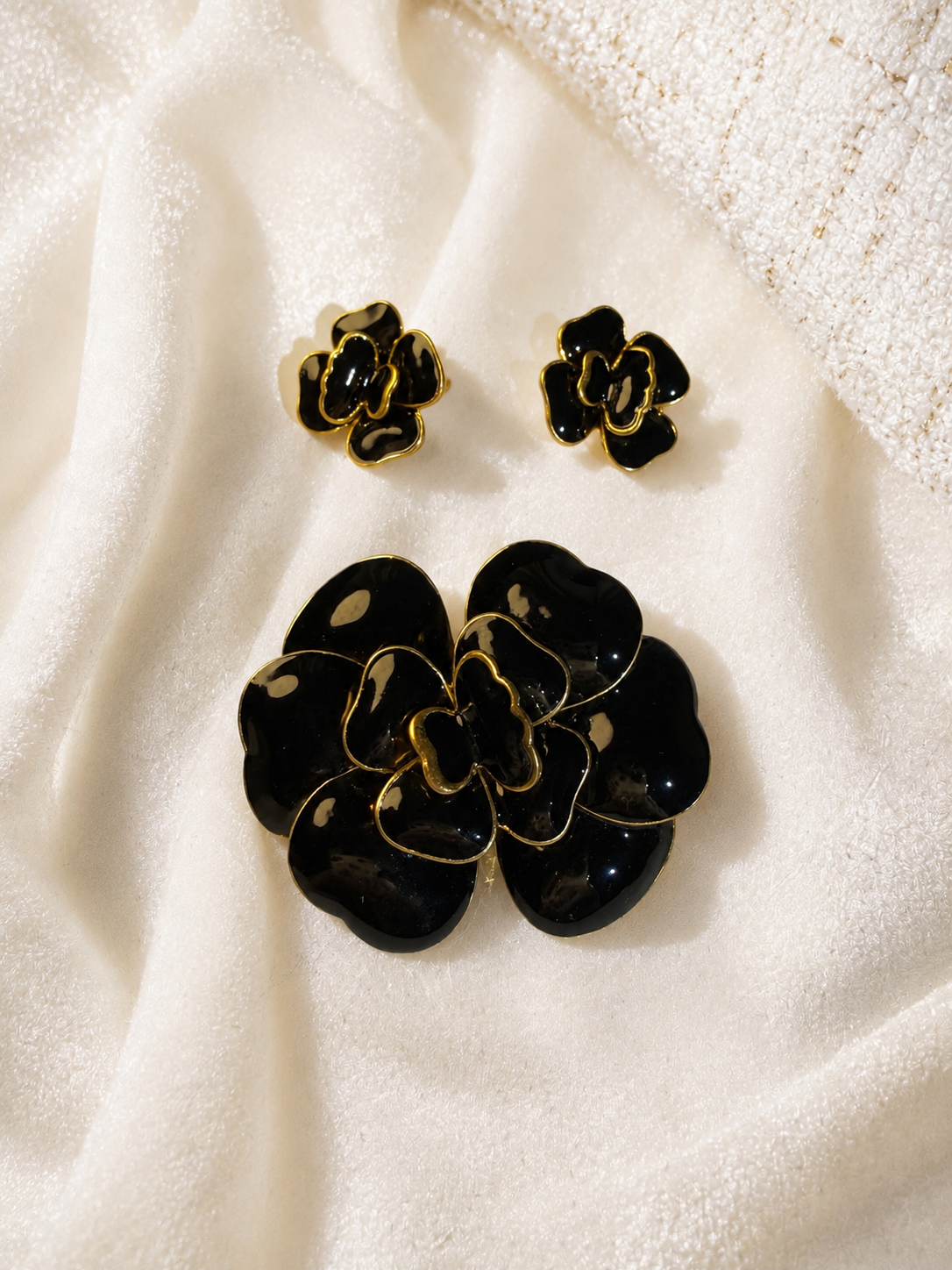
The Gold-Tone Black Enamel-Style Flower Brooch and Stud Earrings Set provides a concrete shape to consider. Its brooch has rounded, glossy black petals edged in gold-tone outlines. Those curves offer a contrast to a jacket's straight lapel edge; the black-and-gold palette gives you two details to pick up elsewhere.

For an outfit to try, pair that palette with a plain shirt and a restrained tie, then compare a small white pocket-square fold with no square. The product photograph shows the set, not its fit on a suit. The listing does not specify the brooch's dimensions or weight; ask for those details before deciding whether it will fit your lapel.
Check the jacket before pinning
A brooch pin is not necessarily designed to pass through the lapel's buttonhole like a flower stem. Check the actual fastening and the garment first, especially for a borrowed jacket or a delicate lapel facing. The brooch and fabric guide covers support and puncture concerns without promising a damage-free method.
Once safely attached, try the jacket with your coat and bag and sit down in it. If the lapel pulls out of shape or another accessory keeps brushing the brooch, change the combination. A successful choice leaves the jacket's line clear and lets you wear the outfit normally.