
A two-mode jewel needs a two-mode description
A convertible brooch-pendant is intended to work as both a pinned ornament and a suspended pendant. Before buying, look for the attachment used in each mode and a clear account of any separate parts. The word convertible does not tell you whether a chain, converter or removable fitting comes with the item.
This is a check of the intended system, not a project for modifying an ordinary brooch. A decorative opening is not automatically a pendant loop. Nor does a photograph beside a necklace prove a compatible attachment. The most useful listing connects its two-mode claim to identifiable hardware and a complete parts description.
Recognize three different conversion arrangements
An integrated pendant loop: The piece includes a loop or bail intended to receive a compatible carrier. It may be fixed or designed to move, but movement should come from the documented construction, not from bending a part that looks like it might open.
A removable or reconfigured assembly: Some dual-use designs rely on a separate pin frame or another detachable component. The seller's instructions should identify what is removed, what remains and how the unused part is stored. A missing small fitting can change the completeness of the object even when the decorative front looks intact.
A separate converter accessory: This is not the same as a built-in loop. Ask the accessory supplier to confirm the supported brooch attachment and wearing orientation for that converter. An available accessory does not make every brooch a supported candidate. Matching the accessory and the original object is a separate compatibility question, not a permission to improvise.
These arrangements explain why two listings can both say brooch-pendant yet include different things. Identify the arrangement before comparing package contents. Otherwise, you may treat an accessory needed by one design as though it were unnecessary because a different design has an integrated loop.
Make a parts map for each wearing mode
Create two columns headed “brooch mode” and “pendant mode.” Put every required component in the appropriate column, including any carrier supplied separately. Then add a third column for evidence: a clear rear photograph, an itemized description or a mode-specific instruction.
| Part or question | Brooch mode | Pendant mode |
|---|---|---|
| Decorative body | Same object identified | Same object identified |
| Working attachment | Documented pin assembly | Documented loop, bail or supported accessory |
| Parts removed or added | List only what the instructions specify | List only what the instructions specify |
| Unused pin or fitting | Record normal configuration | Record its intended position or storage |
| Separate carrier | Not required as a necklace carrier | Chain or cord, with inclusion status stated |
| Evidence of completion | Description and rear view agree | Description and rear view agree |
The point is completeness, not a technical inspection of the latch. Do the advertised modes account for all the parts? Is a detachable component visible in one photograph but absent from the package list? Does “shown with chain” mean the chain is sold with the item, or merely used for presentation? Record the exact wording.
Practice with three listing verdicts
Listing A: The description identifies a built-in pendant loop and pin hardware, with matching rear photographs. The package list identifies the brooch-pendant but says nothing about a chain. Your verdict can be “intended dual use documented; carrier inclusion not established.” That is more precise than either rejecting the design or assuming a complete necklace arrives.
Listing B: The front photograph is attractive and the headline says convertible, but the only rear image shows an ordinary pin assembly. Your verdict is “conversion method not demonstrated.” The next useful request is for the intended attachment and instructions, not a suggestion to pass a chain through whichever opening seems convenient.
Listing C: A seller describes a removable pin frame, shows it separately and itemizes both the frame and pendant body. Your verdict is “parts inventory documented.” You still need the maker's operating instructions; a complete list does not authorize guessing how the assembly disconnects.
All three are fictional exercises. Their purpose is to distinguish the strength of a listing's explanation from the attractiveness of its front view. A well-documented simple design can be easier to evaluate than a complex design described only with enthusiastic styling language.
Read an actual dual-use description

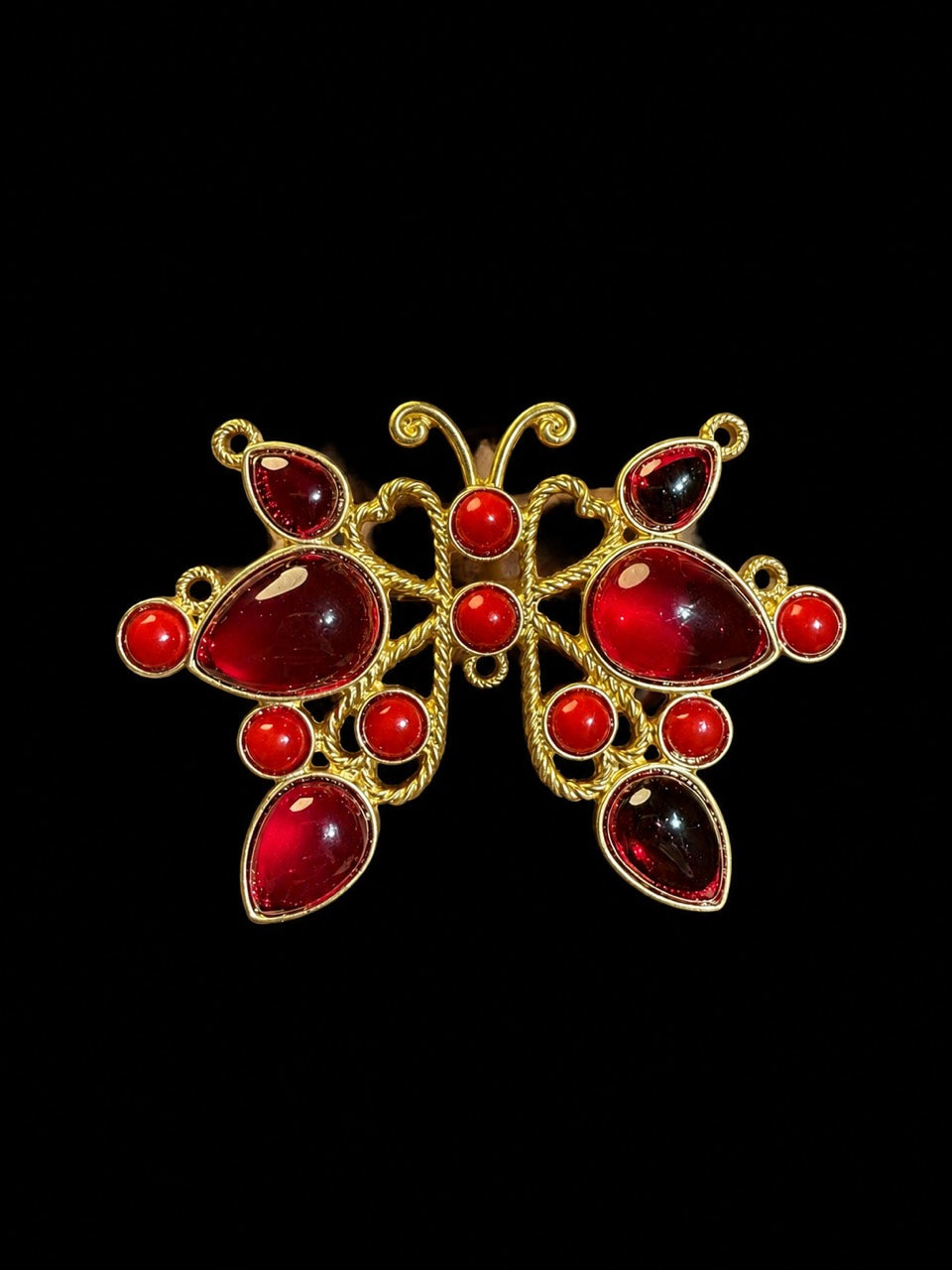
This listing explicitly describes both pin hardware and a pendant loop. It also describes pendant wear with a compatible chain. That supports the intended two-mode use; it does not establish that your existing chain fits or that a chain is included. Those are separate entries in the parts map.
Compare other shapes in the brooch collection without assuming that every brooch shares this construction. If package contents are decisive, send the exact product and requested mode through the contact page. A question about a specific component is easier to resolve than “Can I wear this any way I want?”
Document arrival before attempting a change of mode
On arrival, compare the supplied pieces with your saved parts map while everything rests on a clear surface. Keep small detachable parts together. Read the instructions before operating unfamiliar hardware; stop if the expected part is missing, an attachment is damaged or the described sequence does not match the object.
Do not drill, bend, pry or remove a pin to create the advertised second mode. If the intended pendant configuration leaves an exposed point or an unexplained loose component, set it aside for clarification rather than wearing it experimentally. Once the correct configuration is established, the Journal can help with presentation. The purchase should begin with a complete intended system, not a workaround.