
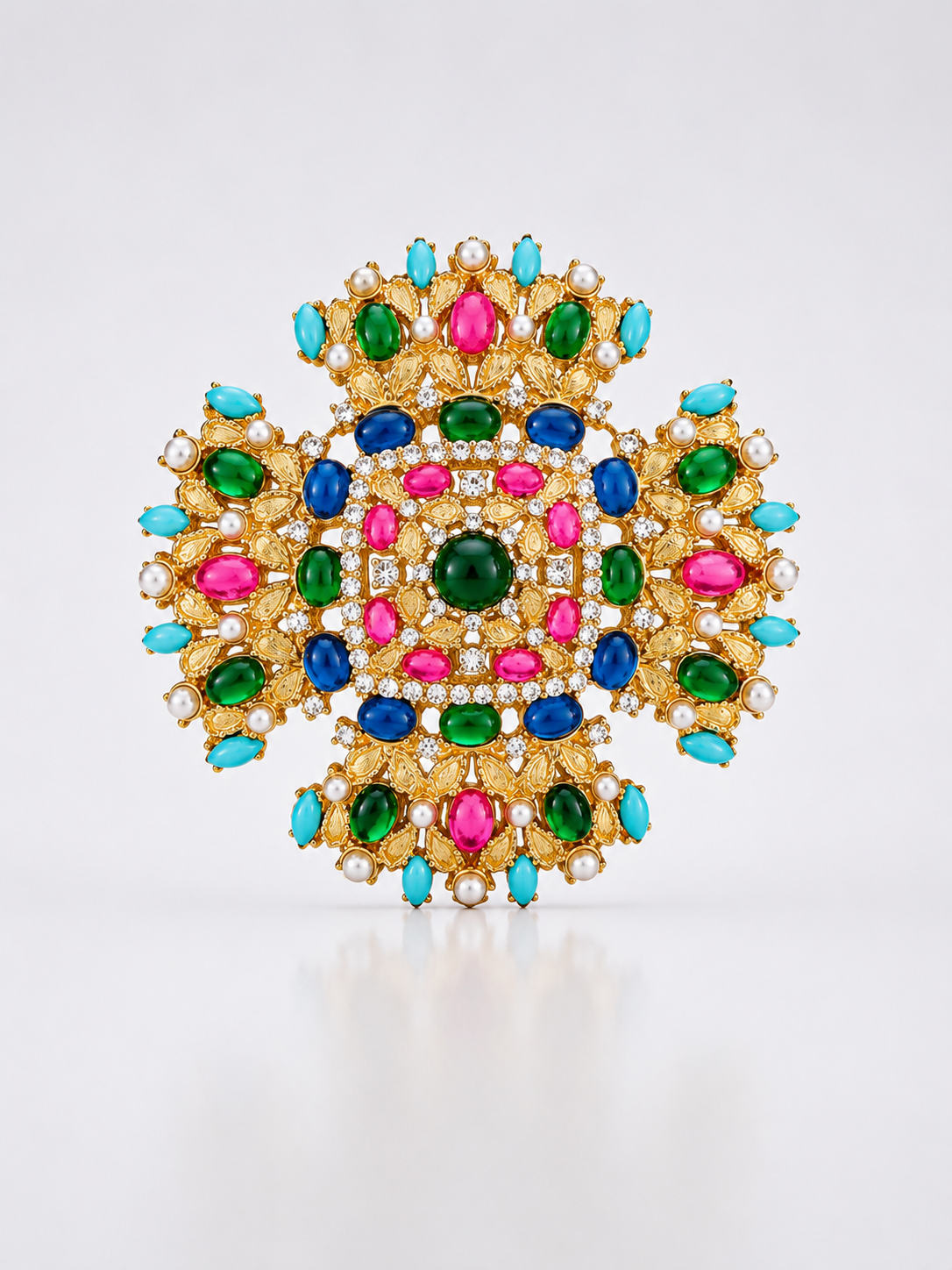
Do not put costume jewelry into an ultrasonic cleaner on the strength of the words “jewelry cleaner.” The category does not establish the piece's materials, treatments, coatings or attachment methods. When those facts are unknown, the practical decision is to keep the piece out of the machine until someone qualified has assessed it.
This is not a claim that every costume piece will be damaged. It is a recognition that you cannot establish suitability from appearance or category alone.
Understand what a machine decision includes
Ultrasonic cleaning uses sound energy in a liquid bath. The bath, its chemistry and temperature, the object's construction and the cleaning action all matter. Choosing a shorter cycle does not identify an unknown material or repair a weak connection.
GIA's care guidance excludes several gem and treatment categories from ultrasonic cleaning and warns that vibration can loosen stones. Those are reasons to assess the complete object, not only the most prominent accent.
Separate known facts from attractive labels
Write down the exact information you have for the piece. “Gold-tone,” “crystal-style” and “pearl-style” describe appearance without supplying a full construction record. They do not answer whether an accent is coated, whether a component contains adhesive or whether a decorative surface tolerates immersion.
| Question | Useful evidence | If unresolved |
|---|---|---|
| What are the components? | Item-specific material record | Do not choose a gem cleaning recipe |
| Are treatments or coatings present? | Relevant maker or laboratory information | Keep machine suitability open |
| How are parts attached? | Construction information and professional assessment | Do not infer security from a front view |
| What is its condition now? | Current examination | Resolve loose or damaged areas first |
These questions are not an invitation to probe an accent with a tool. Documentation can be incomplete without the owner performing a destructive test to fill the blanks.
Do not borrow permission from a diamond guide
A cleaning recommendation for one documented diamond ring does not extend to every sparkling piece. GIA's diamond-cleaning article itself warns about loose stones, adjacent edges and fracture-filled diamonds. Even within that narrower material category, the setting and treatment history change the decision.
For a hypothetical brooch with a bright central accent, pale round details and colored petals, identifying only the central accent would still leave the other components unresolved. The least understood part cannot be ignored simply because it is small.
Read the cleaner's wording as only half the evidence
A machine manual may describe operating instructions and exclusions. It cannot provide the missing history of your individual necklace or brooch. Conversely, a broad care statement such as “wipe after wear” is not authorization to immerse the object.
The GIA cleaning-myths guide specifically rejects the idea that every piece is suitable because a device was made for jewelry. Follow the exact object's guidance, and ask a professional when the manual and the object record do not provide a clear answer.

The gold-tone multicolor statement brooch illustrates why several decorative zones need consideration. The catalog establishes visual design; it does not identify every attachment or grant ultrasonic-cleaning permission. The same boundary applies across the brooch collection.
Choose the next useful action
If the piece is sound and its instructions permit a gentle untreated cloth, follow that limited routine. If it has loose, cracked or flaking areas, stop handling those areas and obtain advice. Do not escalate to soaking, toothpaste or another household method because ultrasonic suitability is unresolved.
Bring the item's description, care instructions and clear photographs to the person assessing it. Ask for a method appropriate to the entire assembly. The general gold-tone care guide covers routine handling; this decision ends when the cleaning method is supported by the exact piece, rather than by the machine's name.