
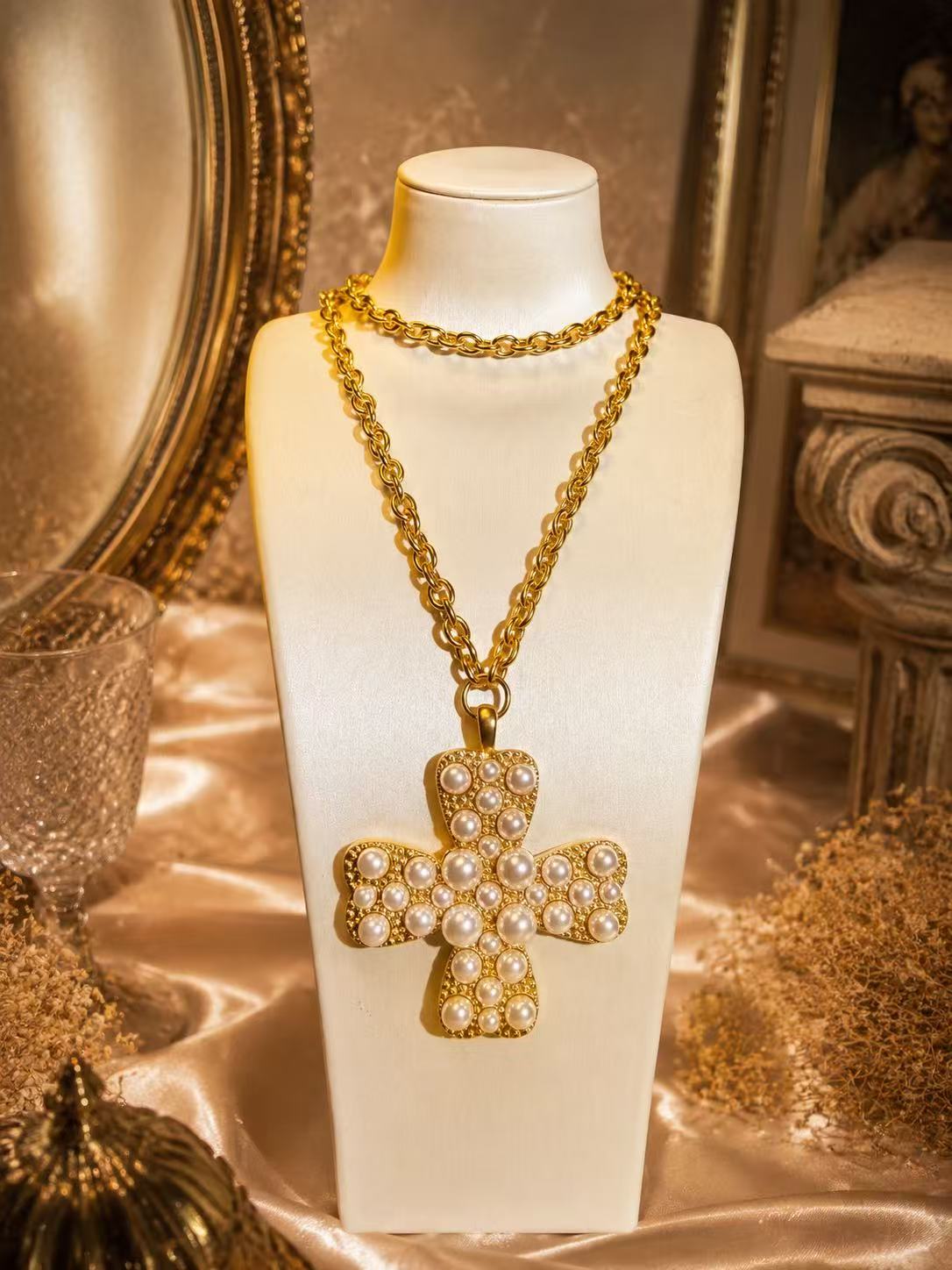
A crucifix includes a representation of Jesus Christ crucified on the cross. A cross pendant without that representation is generally described simply as a cross, whether its surface is plain, pearl-style, brightly colored, or highly ornate. The amount of decoration does not settle the distinction.
For a wearer or gift recipient, the image can matter much more than whether the necklace seems understated or dramatic. Start with the symbol the person wants, then consider the design. A cross and a crucifix should not be treated as interchangeable just because both fit the same jewelry category.
Look for the represented figure
The figure of Christ is often called the corpus. It may be modeled in relief or represented within the design; do not reduce the question to whether the pendant has a three-dimensional body attached. A detailed front view is more useful than a product headline that uses cross and crucifix loosely.
Religious context explains why that distinction matters. The USCCB's discussion of the altar cross describes the figure of Christ crucified and its role in recalling the Passion. That is an explanation of Catholic liturgical imagery, not a universal rule telling every individual which necklace to wear.
Separate imagery from visual richness
Some jewelry guides describe a cross as minimal and a crucifix as elaborate. That can describe selected examples, but it is an unreliable way to identify a piece. A cross can have broad rounded arms, a patterned border, and many decorative accents. A small crucifix can have a restrained outline while retaining its defining figure.
Ask two different questions: what is represented, and how is it designed? The first concerns imagery. The second concerns scale, outline, color, and surface detail. Answering both lets you choose an ornate cross without accidentally presenting it as a crucifix, or recognize a quiet crucifix without assuming it is only a simple geometric ornament.
Read this pearl-style cross accurately

The RJC listing describes an oversized gold-tone cross, white pearl-style beads, a link chain, and a textured reverse. Its photographed front supports the cross description. It does not establish a crucifix, genuine pearls, a precious-metal composition, or a blessed devotional object.
For someone who has specifically requested a crucifix, this design would not meet that request merely because it is decorative and cross-shaped. For someone who prefers an embellished cross, those same visible features may be exactly the appeal. The distinction changes the decision without ranking one preference above the other.
Let the person's tradition stay personal
The cross has central significance within Christianity, and crucifix imagery is especially prominent in some Christian traditions. Individual practices, family customs, and personal devotion still vary. A denomination label alone is insufficient evidence of someone's preferred jewelry.
A person may want to wear a cross regularly, reserve a particular crucifix for private devotion, choose neither as an accessory, or attach an important family memory to one specific design. Jewelry cannot establish how religious someone is, and a seller should not assign the wearer a belief from the pendant they choose.
If the person wants guidance about a specific religious practice, their own faith community is the appropriate place to ask. A jewelry comparison can clarify the visible design without deciding a question of devotion on their behalf.
Make a symbolic gift an explicit choice
If you are choosing for someone else, a narrow question is more useful than guessing: would they prefer a cross without the figure, a crucifix, or no religious jewelry? If they have already named the symbol they want, preserve that request when comparing designs. A preference for gold-tone jewelry does not answer the imagery question.
Keep a gift note close to your actual reason for choosing it. You might mention a shared family connection or the recipient's own request. Avoid promising protection, blessing, or a meaning they have not expressed. A gift need not make a theological statement for its giver.
Explore the necklace selection after the symbol is clear. For a question about the photographed front or reverse of the RJC cross, request that specific product detail. Choosing the image thoughtfully leaves room for the wearer to decide what it means in their own life.