
For a pottery class, decide what jewelry stays off the workbench before leaving home. Ask the studio about the particular session rather than assuming every creative workshop has the same rules. A wheel-throwing class, a hand-building session and a painting activity can involve different instructions. The provider should explain what applies to yours.
Read the studio's answer, not a generic outfit list
June and Gem's FAQ recommends removing rings, bracelets and watches, while discussing participation when an item cannot be removed. Members Only's FAQ advises leaving hand and wrist jewelry at home. Stupots recommends removing all jewelry before its session, especially rings and bracelets.
These are examples of provider guidance, not permission to select the most convenient rule and apply it elsewhere. In particular, “remove rings” does not automatically mean “all earrings are approved.” A studio may have a broader requirement or an instruction specific to its equipment.
Send one specific booking question
Try: “I am booked for the beginner wheel class on Saturday. What jewelry needs to be removed? I have an item I cannot readily take off; should I discuss that with the instructor before attending?”
You do not need to describe personal details in a public comment. Use the studio's normal contact channel and explain only what it needs to answer. If the answer remains unclear, resolve participation with the provider rather than relying on a workaround from an accessory article.
For a surprise group booking, the organizer can pass the requirements to everyone in advance. That is more considerate than letting guests discover them at the workbench.
Separate the class from the rest of the day
Make a simple timeline: travel, instruction, hands-on work, class completion and any later plans. The easiest jewelry plan may be to wear none until the activity is finished. You do not need a different “crafting version” of every piece you normally wear.
For example, a hypothetical birthday outing includes a class followed by a restaurant visit. The class does not require you to arrive already wearing the evening accessories. If adding jewelry later is impractical, omit it for the whole outing. A full schedule is not a reason to disregard the studio's instructions.
Do not use an unrelated design feature as permission
A low ring profile does not establish that a ring belongs in a pottery session. A brooch keeps decoration away from the hands, but that fact alone does not override an all-jewelry instruction. The ring-profile guide answers a different question about construction and clearance, not workshop eligibility.
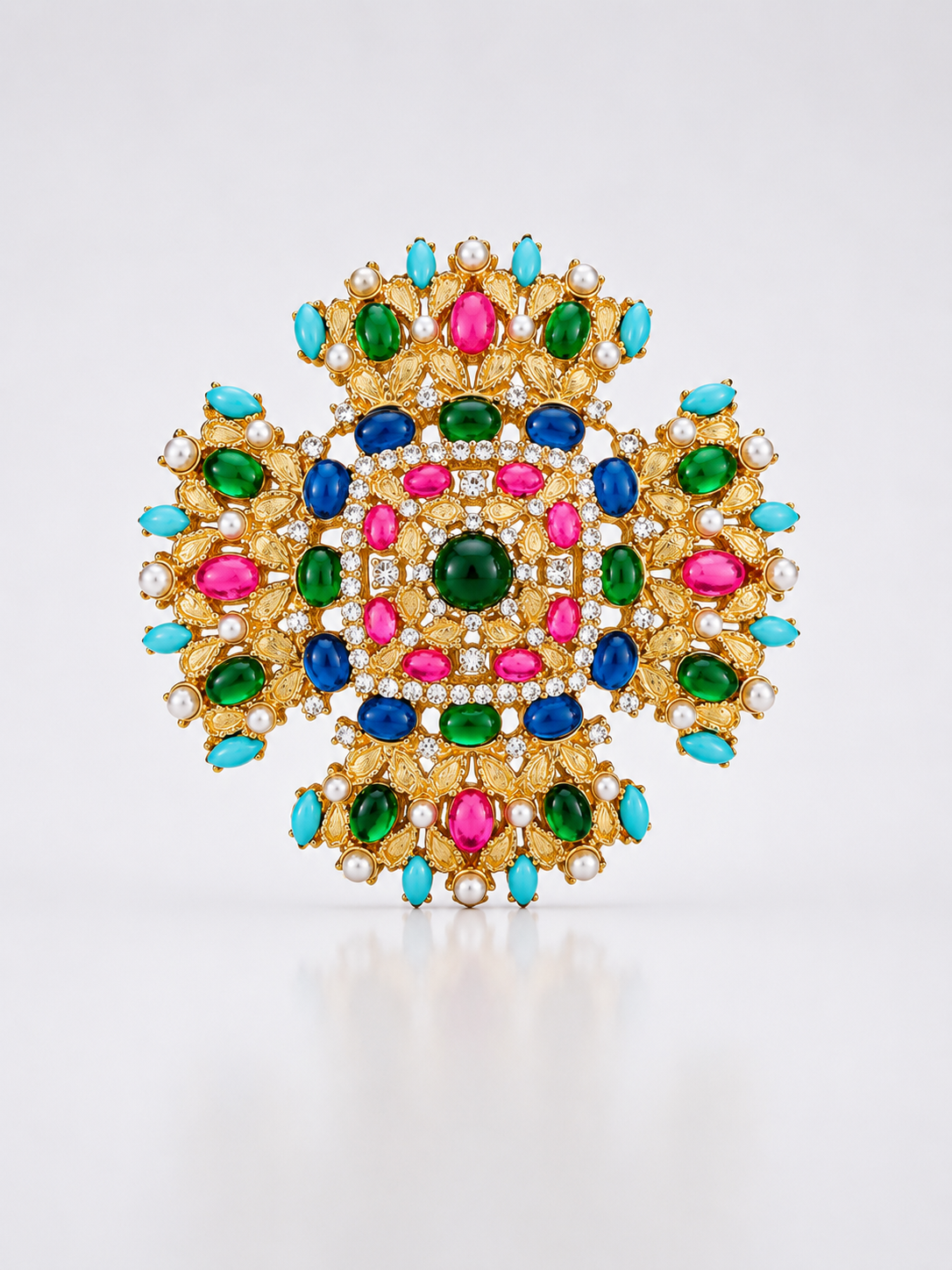
The multicolor ornate brooch is an example for a separate occasion after class. Its decorative appearance supplies no evidence about use at a pottery bench.

There is no need to purchase anything for this plan. If you want a piece for another part of your day, brooch designs can wait until the practical class requirements are settled.
Let the instructor resolve a change on arrival
If the actual activity differs from the booking description, ask before beginning. Do not improvise by taping jewelry, hiding it beneath clothing or assuming an alternative technique makes it acceptable. The instructor can explain the choices available in that class.
The result should be a participation decision: attend under the stated requirements, agree on an instructor-approved alternative, or discuss another session. This is not a jewelry-cleaning guide or a claim about how particular materials react to clay. It is a way to arrive ready for the experience you booked.