
A jewelry gift can be a surprise without every part being unknown to the person receiving it. Ask which decisions they want to make, then keep the remaining details for the reveal. The aim is to give them a welcome option, not to stage a test of how enthusiastically they react.
Separate three permissions
Before comparing products, distinguish permission to give jewelry, permission to choose the design and permission to present it publicly. Agreement to one does not establish the others. Someone may enjoy a necklace selected together but dislike opening an intimate gift in front of colleagues.
Emily Post's gifting overview treats gifts as gestures within relationships. The practical framework here is to make the expectations around that gesture explicit; it is not a scientific scale of generosity or affection.
Choose a rung on the surprise ladder together
| What they choose | What can remain a surprise | Useful wording |
|---|---|---|
| Exact item and option | Note and presentation | “Would you like this exact one, with the reveal left to me?” |
| A short list of acceptable items | Your final selection | “Are these all choices you would actually enjoy?” |
| Category and essential requirements | Design within those boundaries | “Which details should I definitely check with you?” |
| No jewelry gift | A different agreed gesture | “Thanks for telling me. Let's leave jewelry out.” |
None of the rungs is less thoughtful. Do not treat the broadest permission as the most affectionate response. A person who gives you an exact link has made the practical choice clearer, not spoiled the gift.
Keep requirements outside the surprise
Fastening preference, willingness to wear a category and any material requirements belong with the recipient. You can ask directly without requesting an explanation of private health or personal history. If you cannot verify a required specification, pause that candidate rather than assuming its appearance is sufficient.
GIA's gift advice emphasizes the wearer's personal taste. Its fine-jewelry examples do not describe RJC materials, but that preference-first principle is useful. Observation can suggest a question; it does not replace the person's answer.
Use the exact option in the agreed choice
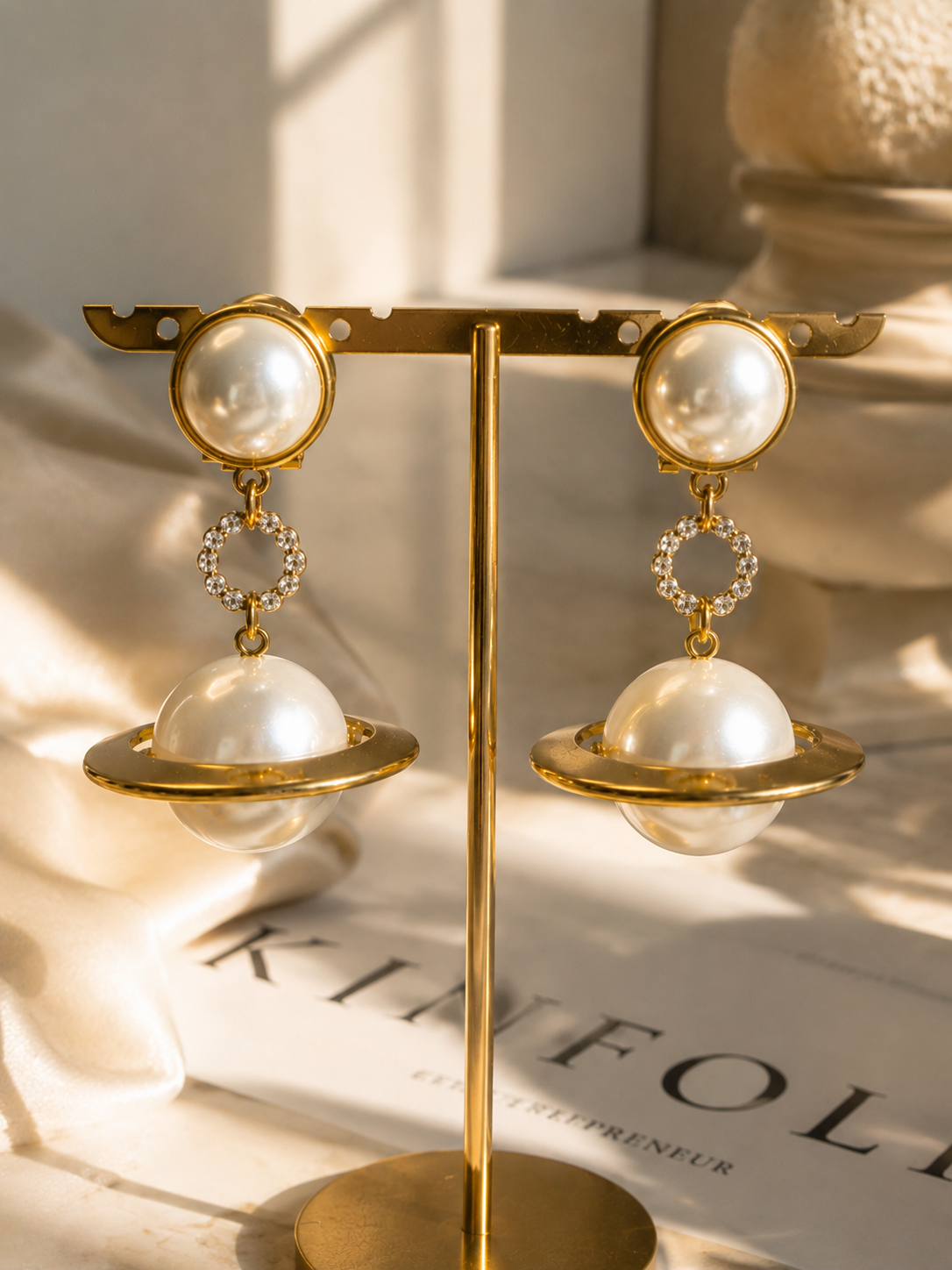
The Clip-On option of the orbital drop earrings is a concrete example. If the recipient asks for that fastening, save that exact selection. A similar front photograph is not evidence that a different option is interchangeable.

Imagine that someone approves clip-on earrings with pale accents but asks to keep the gift private. You may still surprise them with the design and a personal note. Announcing the gift at a party would cross a separate boundary, even if the product choice were correct.
Make room for a response that is not a performance
Offer the gift without asking for an immediate try-on, photograph or promise to wear it at your next meeting. A simple sentence helps: “I thought you might enjoy this; there is no need to put it on now.” If a change is needed, discuss what the seller actually allows rather than promising an exchange you have not verified.
Emily Post's advice on unsuitable gifts separates a warm thank-you from a perfect match. The friendship gift guide addresses choosing from known preferences; this framework determines which choices should be shared. Browse earrings only within the permission you have actually received.