
Jewelry sell-through rate is useful only when the numerator, denominator, date range, and selling unit are clear. Count a sold pair as a pair and a sold set as a set. Do not compare a month of sales with today's inventory and assume the result describes that month.
Write the formula beside the result
Different systems use different sell-through conventions. In its current inventory report documentation, Shopify defines sell-through as quantity sold divided by quantity sold plus ending inventory, expressed as a percentage. Use the report's displayed period and definitions rather than silently replacing them with another formula.
A purchase-cohort calculation based on units received can answer a different question. Label it separately; identical percentage signs do not make the measures interchangeable.
Work through a small fictional example
Imagine one exact earring variant has six pairs sold and nine pairs remaining at the end of the chosen period, with no complications in this simplified example. Using the sold-plus-ending formula, the result is 6 ÷ (6 + 9) × 100 = 40%.
That is six selling units out of fifteen, not twelve individual earrings out of fifteen pairs. The figures are illustrative, not Rustic Jewel Co sales or a recommended performance benchmark.

Keep complete sets and exact variants separate
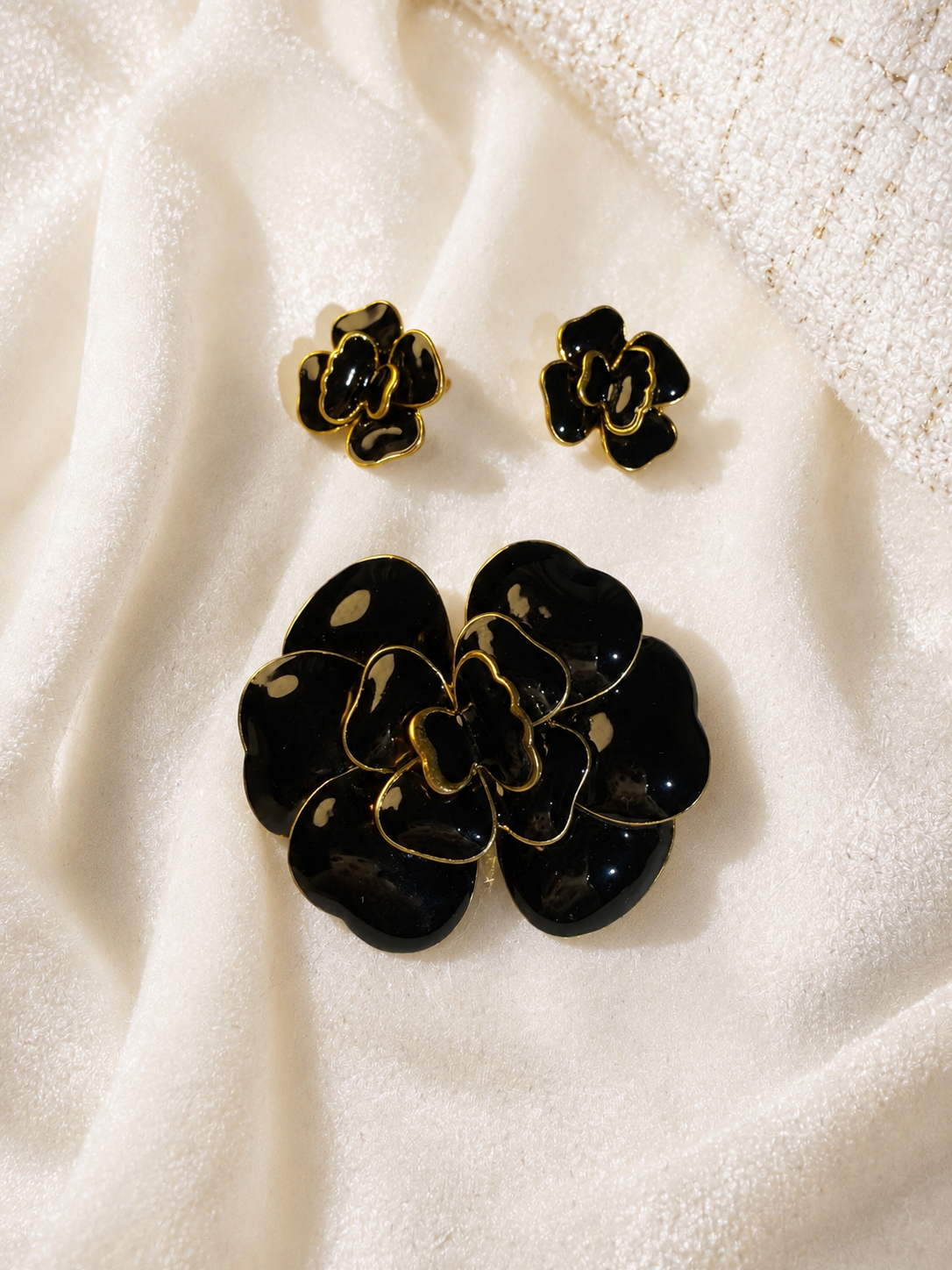
The pictured product combines a brooch and matching earrings. If the selling unit is one complete set, the set is the unit in the calculation. A missing component does not create a fractional saleable set; it creates an exception that needs its own inventory record.
Likewise, do not combine clip-on and pierced options, or several colors, if you need to decide which variant is moving. A product-level percentage may hide an unsold option behind a stronger one.
Check what the report leaves out
Read how the source handles returns, adjustments, transfers, untracked inventory, and negative quantities. Reconcile exceptions rather than trying to force every movement into the sales number. Record the report's cutoff, since inventory analytics may lag live operations.
Use the jewelry inventory worksheet to keep identities and movements clear. A clean ledger is the foundation of a useful percentage.
Interpret the rate with the opportunity to sell
A newly received variant and an older one may have had different exposure. A sold-out item may have been unavailable for part of the period. A 100% rate from one pair is not evidence of broad demand. Add units, days offered, stockouts, selling price, and returns to the review.
Before placing another order, use wholesale inquiries to confirm current options and terms. Sell-through helps describe a past inventory outcome; it does not guarantee future demand, profit, or availability.