
Moving jewelry from a drawer to a display should leave two facts clear: where each unit went and whether the boutique's total changed. For an ordinary move within the same store, the total stays the same. Treating the destination as a new receipt can double-count stock that was already present.
Name the two places before touching the stock
Choose the exact source compartment and destination display position. Confirm the variant, the unit, and whether the destination has room for the quantity you intend to move. A clean receiving tray can serve as a temporary carrier, but it should not become an unnamed third stock location.
This task follows the physical arrangement in the jewelry display guide. It does not decide what to purchase or how much demand to expect. The move should be supported by the actual display plan and available stock, not a forecast invented from an empty space.
Use a two-place balance check
In a hypothetical store, a brooch variant has seven units in the backroom and one on display. Staff move two units to the display. The resulting counts are five and three; the combined count remains eight.
| Place | Before | Movement | After |
|---|---|---|---|
| Backroom compartment | 7 | −2 | 5 |
| Display position | 1 | +2 | 3 |
| Same-store total | 8 | 0 | 8 |
Record one movement reference linking both ends. Two unrelated notes, “remove two” and “add two,” are harder to reconcile. If only one of the two intended units moves, record one completed unit and leave the remaining request open or cancel it explicitly.
Give interrupted work a real address
Suppose a customer needs help after staff lift two brooches from the backroom but before they reach the display. Place the identified carrier in a designated temporary area and record the units there. Do not mark the destination complete because the move was started.
At resumption, verify the carrier contents and finish the handoff. A second person should be able to continue from the note without asking where the pieces were left. A temporary movement list should reference the authoritative stock record rather than independently controlling the store total.
Respect the difference between a bin and a store
Shopify's current inventory guidance says its transfers move inventory between locations, not between bins inside one location. Its bin field also permits only one assigned bin per variant per location. Do not create fictitious storefronts merely to make a simple tray movement look like a supported transfer.
If a variant is routinely split between display and backstock, choose a supporting location process or tool that actually represents that arrangement. Keep the native location total authoritative and document how the supporting record reconciles to it.
Finish at the destination, including the ticket
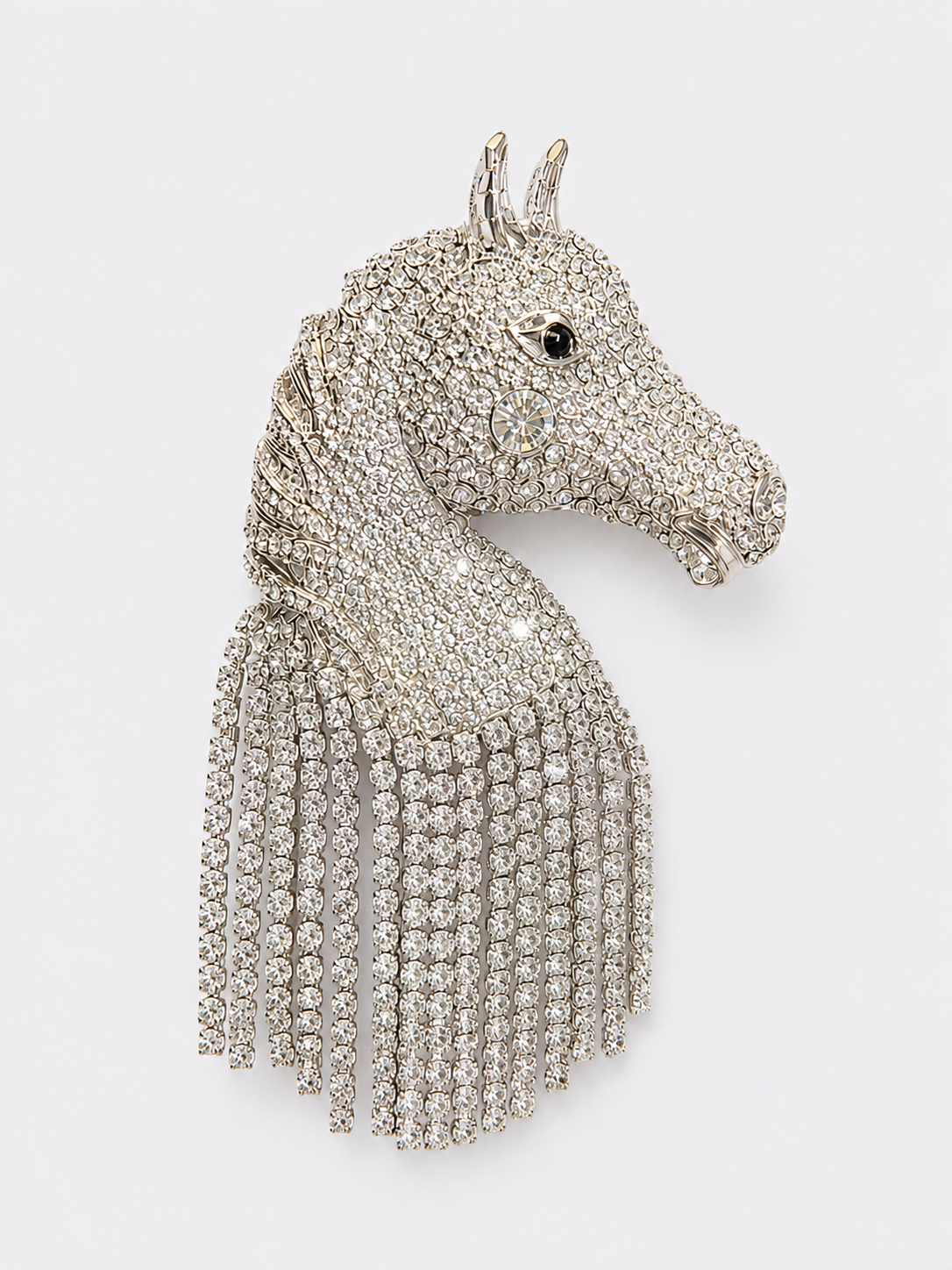
The horse-head fringe brooch illustrates why identifying the final position matters: the shape and hanging details need a suitable support, and its ticket needs to stay associated when the display changes.

At the destination, read the item identity back, count the moved units, check the ticket, and confirm the arrangement leaves neighboring pieces separately retrievable. Remove obsolete location notes when a position is emptied. Faire's stockroom guidance stresses maintaining labels and maps as stock changes; that maintenance belongs at the end of the move.
Use the brooch collection for product selection context. A completed movement record establishes custody and location, not improved sales or an automatic need to buy replacements.