
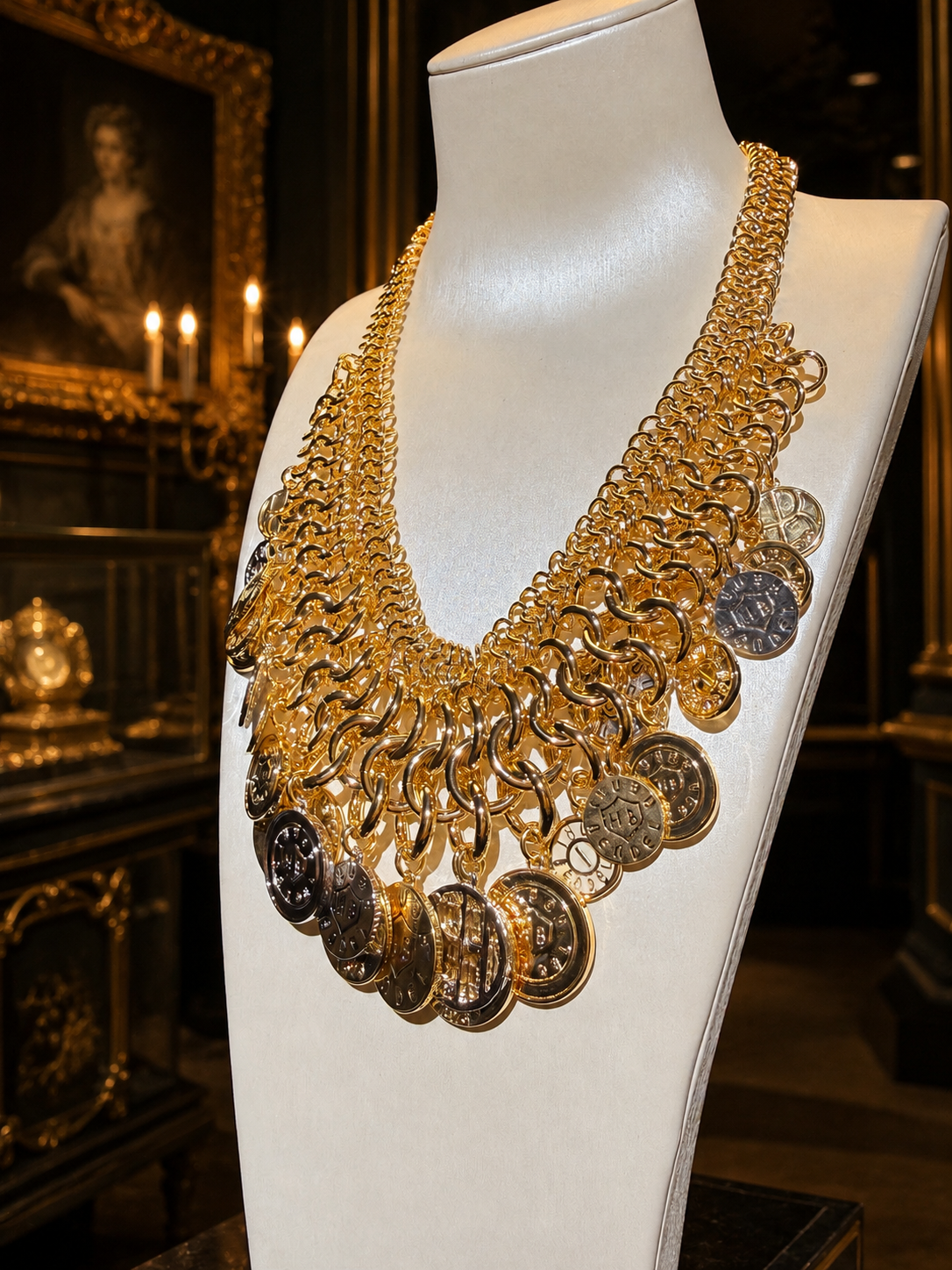
With a sheer shirt, decide which layer the necklace belongs to before choosing its color. Wearing it over the outer shirt gives a different result from wearing it beneath the sheer fabric or inside an open front. The underlayer also supplies a visible neckline, straps, and a background that the outer shirt does not erase.
You do not have to hide those layers. You do need to decide which outlines you want someone to see.
Build the clothing layers without jewelry
Put on the underlayer and sheer shirt together in ordinary light. Check the front, back, and sides. Choose coverage you are comfortable with; do not assume a tank is opaque merely because it appears beneath a sheer garment in a product photograph.
Real layered designs vary. Eileen Fisher's sheer elbow-sleeve top includes a sleeveless slip, while its long sheer shirt is described as a separate layering piece. A supplied slip and a separately chosen tank can both create visible boundaries of their own.
Notice where the inner neckline sits relative to the outer one. A necklace can fit inside one opening while cutting across the other.
Compare three layer orders
| Arrangement | Visual result to examine | Practical limit |
|---|---|---|
| Necklace over the closed sheer shirt | The ornament is in front of both clothing layers. | It must rest without pulling the loose overlay into a new shape. |
| Necklace beneath the sheer shirt | The outline is filtered through the outer fabric. | Raised parts must not catch or tent that fabric. |
| Necklace inside an open sheer shirt | The inner layer displays the piece directly. | The shirt edges must leave the ornament visible as they move. |
Try the arrangements one at a time by removing and replacing the necklace, rather than dragging it through the neckline. If fabric catches, stop that comparison; do not keep moving the piece to see whether it releases.
Choose clarity or a filtered outline
A necklace under sheer fabric may become a quieter shape rather than a clearly detailed ornament. That is a valid effect if intentional. Check whether you can still identify the part of the design you liked, and whether its clasp or raised setting creates an unwanted outline elsewhere.
For a sharper presentation, try the necklace against the underlayer inside an open shirt. That avoids relying on transparency to reveal the detail. With the shirt closed, decide whether the ornament belongs fully outside or fully underneath; repeatedly appearing and disappearing at the opening can look unresolved.
The gold-tone medallion chain necklace offers recognizable disc shapes for this comparison. Its image is only a design reference. Total wearing length, designed adjustment range and decorative dimensions are not supplied in the current product description; obtain them from the seller before judging whether it fits your layered neckline.

Include the underlayer's edge in the composition
Imagine a low scoop tank under a buttoned sheer shirt. A pendant may sit on the tank, while the chain crosses the exposed area above it. Now substitute a higher-necked tank without changing the necklace. More of the chain has a continuous fabric background, so the same jewelry can read differently without changing the outer shirt.
This is a layer-order and background decision, not a demand to match the tank to skin or to the shirt. For a patterned lace surface rather than a plain transparent overlay, our lace styling guide addresses the additional motif detail.
Check the shirt both open and closed
If you will change the buttons during wear, compare both states before choosing the final arrangement. Keep the necklace in the same layer unless you intentionally remove and replace it. Do not pull a pendant through the button opening to improvise a new route.
Browse necklace shapes with the full layered outfit in mind. The useful choice is the one whose visibility, background, and contact with the overlay you actually prefer—not simply the most decorative piece.