
A trench coat is not one large, flat background for jewelry. The collar, front flap, shoulder tabs and overlapping coat fronts can sit on different layers. Before selecting an ornament, decide whether you want to preserve that layered construction or add a clearly separate shape.
The useful distinction is between a compact flap, an exaggerated overlay and strongly patterned tabs. Two coats can have similar neck openings but leave quite different arrangements beneath them. Keep your usual fastening and belt arrangement unchanged for this comparison.
Separate the flap from the panel beneath it
Start at the shoulder tab and follow the edge of the front flap. Find where the flap ends and the coat front continues underneath. Do the same with the lapel. In a straight-on view, overlapping cloth can look like one uninterrupted area; from a slight angle, the separate edges become easier to identify.
Burberry's Waterloo details list epaulettes, a front shoulder flap, a back storm shield and a double-breasted closure. They are distinct garment components, not interchangeable places to display jewelry. The back shield, in particular, is not another front lapel.
Notice which apparent empty areas actually belong to an overlay and which belong to the inner outfit. This is a layout check, not a test of whether the cloth can support a pin.
For a compact one-sided flap, keep the necklace whole
Imagine a trench whose modest front flap occupies one upper-chest area but leaves most of the inner shirt visible. A broad necklace may have its center visible while one decorative side disappears behind that flap. A pendant with a narrower decorative footprint might remain complete within the exposed shirt.
Compare those two outlines with the coat sitting naturally. If you prefer the broad necklace partly concealed, keep that effect deliberately. If you want the whole ornament visible, choose a footprint that fits the actual unequal opening; do not slide the necklace off-center merely to match the flap. A symmetrical neckline chart would miss this one-sided obstruction.
For an exaggerated overlay, leave its volume readable
Burberry's Pembury description explicitly identifies an exaggerated front flap and back shield that add volume. With a similarly broad overlay on your own coat, there may be no useful chest area that behaves like the compact-flap example.
Here, compare jewelry beside the coat rather than across the overlay. A necklace displayed on top can traverse the flap, its free edge and the lower coat panel in one line. That can obscure the layered shape you chose the coat for. Earrings leave the flap's edge and volume visible; a necklace worn on the inner outfit can remain concealed without being treated as a styling failure.
The change in decision follows the extent of the overlay, not a rule that trench coats prohibit necklaces.
For patterned tabs, read the repeated small panels
A tonal flap creates relief; patterned tabs create several graphic details. This Kensington design places check accents at the throat latch, epaulettes, cuffs and buckle. Its plain-looking coat body therefore does not tell the whole visual story.
Imagine that layout with a small repeated pattern on each tab. Fine, similarly repeated jewelry can extend the patterned effect near the face. A few larger, clearly separated earring shapes can instead introduce a different rhythm. Compare those two results while leaving the tabs as designed; there is no need to add matching ornaments at the cuffs and chest to connect every patterned area.
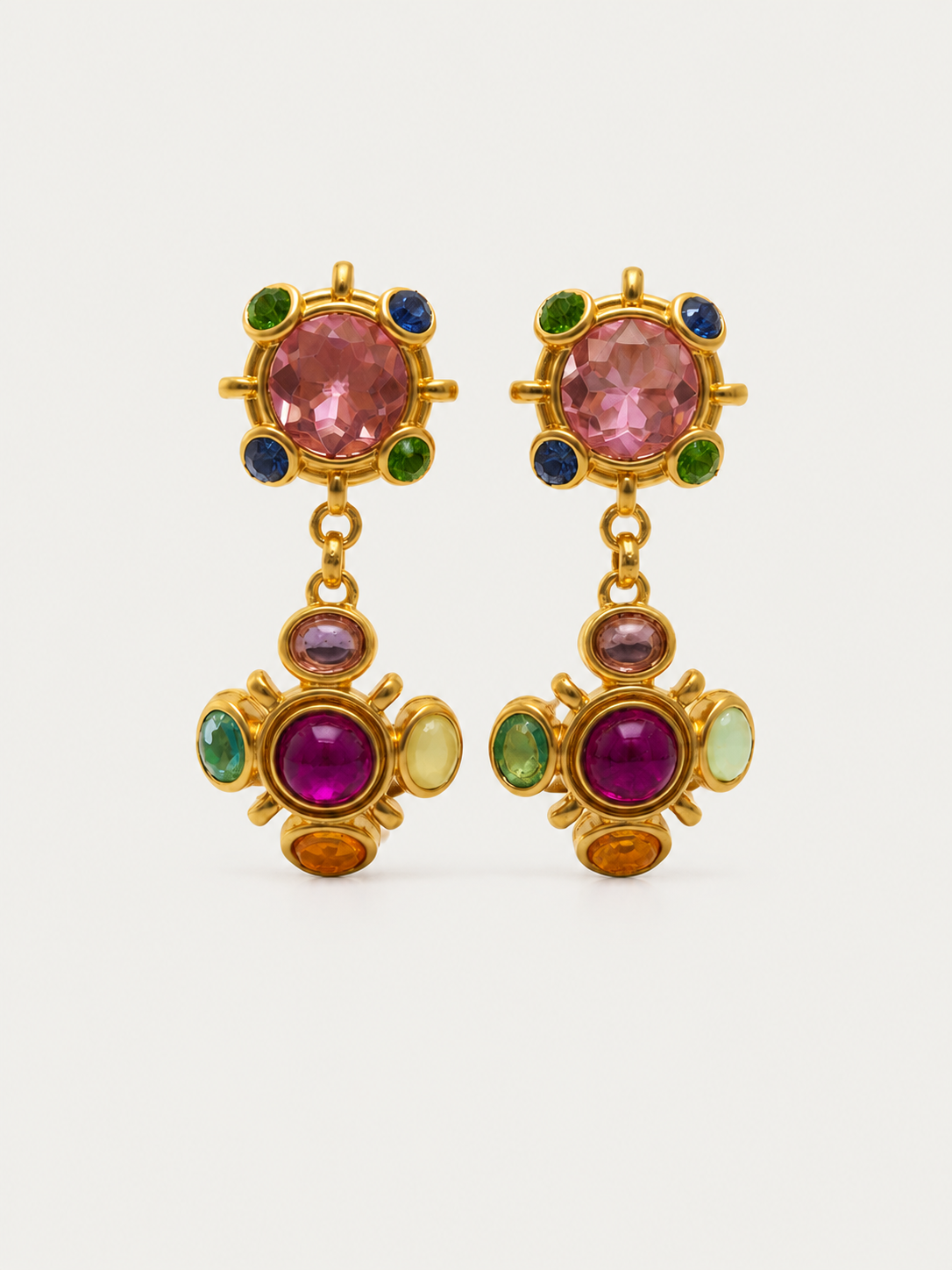
The multicolor stone-style drops offer rounded motifs for that second comparison, not verified scale or clearance beside your coat. Their dimensions and weight are absent from the current product description; obtain them before deciding on fit.

Choose the feature you want the jewelry to reveal
With the compact flap, the decision is whether the necklace remains a complete shape despite a one-sided obstruction. With the broad flap, it is whether the overlay's relief remains visible. With patterned tabs, it is whether jewelry repeats or contrasts with their small graphic rhythm.
If you want a brooch, the separate brooch-side guide addresses placement and support; do not treat this visual map as pinning approval. Compare earring designs when you want to leave the coat's layered front intact.