
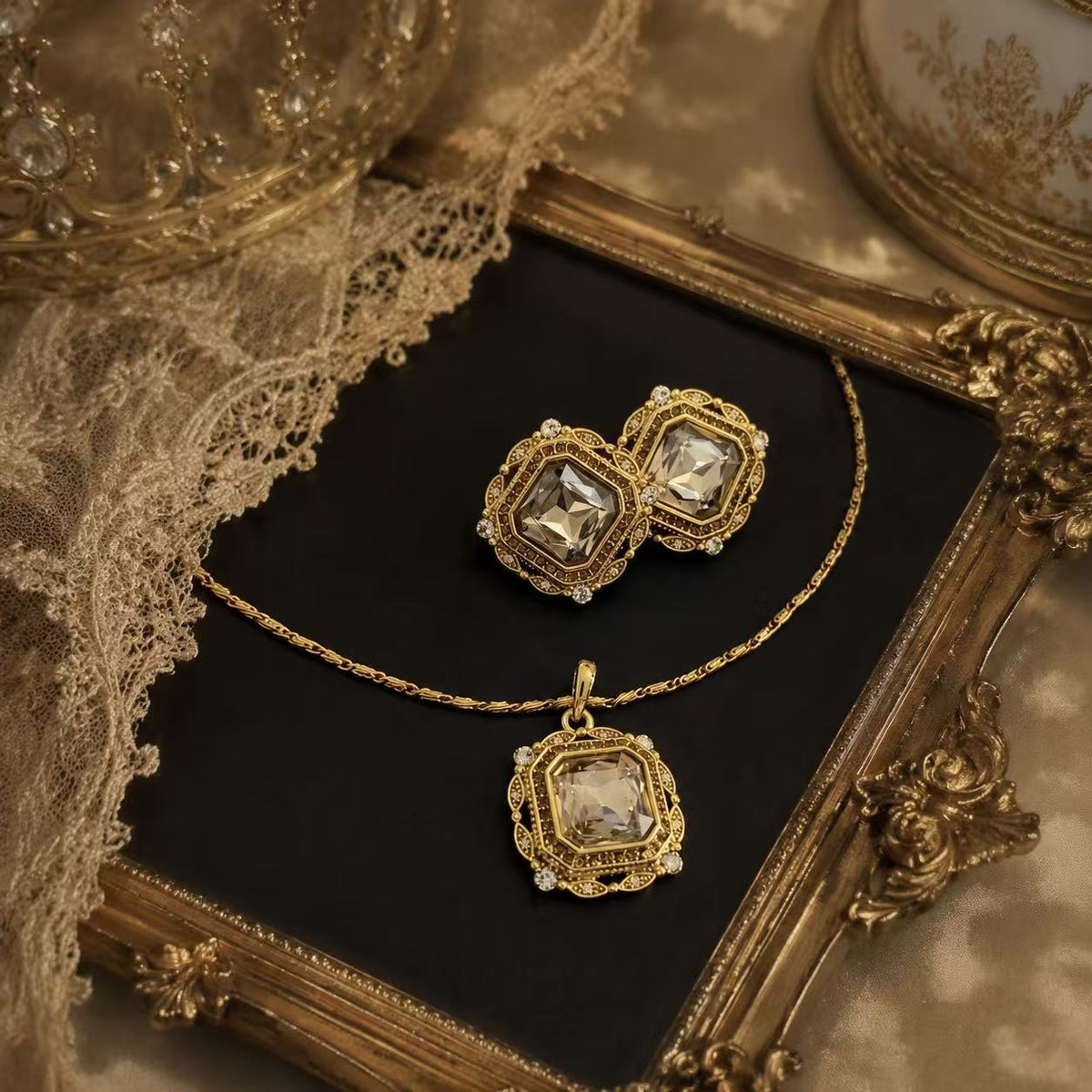
With a velvet dress, start by moving in the dress before choosing the jewelry. The surface can look light in one direction and dark in another, so the contrast you see in a still photograph may not last when you turn. A clear jewelry outline often matters more than adding several reflective details.
Compare the dress in ordinary room light
Stand near a window, then away from it. Notice where the fabric looks darkest around the neckline and shoulders. Hold each jewelry option near its intended position; a pale accent may be easy to see while a dark accent blends into the dress.
Neither effect is wrong. A low-contrast piece can be appealing if you want texture rather than brightness. The aim is to recognize the effect before ordering, not to decide that velvet permits only one kind of jewelry.
Choose between outline and sparkle
A broad metal-tone shape gives a defined edge. A pale pearl-style detail creates a light patch. Faceted accents add smaller flashes. Compare those effects separately before combining them. If the dress has a decorative buckle or jeweled buttons, include them in the comparison.
The pictured champagne-accent set is one example of a pale focal detail within an ornate frame. It is not evidence that the accents are a particular gemstone.

Let sleeves determine the wrist decision
A long velvet sleeve may cover a bracelet while standing and push against it while seated. Try reaching for a glass or bag with the sleeve in its normal position. If the bracelet repeatedly catches or disappears, an earring or necklace may be a more useful purchase.
Do not stretch a cuff open to force it over a thick sleeve. A visual styling idea does not establish that a particular bracelet is adjustable or suitable for that use.
Give a necklace a stable place
With an open neckline, compare a necklace that stays on the exposed area with one that clearly lies over fabric. A pendant that repeatedly drops behind the neckline may need a different length, but confirm the necklace's actual adjustment range first.
With a high neckline, try earrings before deciding you need a necklace at all. If you do wear a necklace over velvet, check its reverse for rough contact points and stop if it catches. The neckline guide helps separate placement from decoration.
Include the coat and scarf in the try-on
A winter outfit does not end at the dress. Put on the outer layers, then remove them as you would at the venue. Long drops that work with the dress can still interfere with a scarf. Keep a small separate case available if you choose to put the earrings on after arriving.
Explore statement earrings or revisit a set you already own. Velvet supplies plenty of visual character; the jewelry only needs to contribute the detail you still want.