
With a striped shirt, decide what the jewelry's line should do. A vertical pendant can cross horizontal bands; a curved chain can break a field of straight lines; earrings can leave the shirt's rhythm uninterrupted. Matching a stripe color is optional and does not resolve those placement choices by itself.
The most useful comparison is between the width of the stripes, the gaps between them, and the outline of the jewelry. A delicate-looking necklace is not automatically the least distracting option: it can get visually tangled in a fine pattern.
Look at the stripes where the jewelry will sit
Inspect the shirt on your body. A horizontal band may curve at the chest, and a vertical stripe may lean beside a button placket. Sleeves can run in another direction from the bodice. Identify the local pattern rather than treating the whole garment as one diagram.
A Seasalt Sailor Shirt supplies one familiar example: a boat-neck top with Breton-style stripes. A finely striped woven shirt presents a different density. Neither dictates a jewelry size; each gives you a different field against which to compare it.
Choose between crossing and following
For horizontal stripes, a pendant can create a vertical interruption. Let its central form be visibly different from the bands so it does not look like a mark or broken section of stripe. A rounded necklace creates a softer crossing because its edge moves through several stripe levels.
For vertical stripes, a long chain may run alongside a stripe and seem to vanish into it. If you want a distinct necklace, compare a broader curve or a pendant whose width crosses more than one stripe. If you like the barely visible effect, keep it; the point is to choose it deliberately.
Notice an accidental near-match
Three relationships are worth comparing:
- Same width, same direction: the chain may resemble another stripe.
- Different width, same direction: the chain can become a clear accent within the repeated lines.
- Different direction: the jewelry interrupts the pattern, so its crossing points become noticeable.
There is no required stripe-to-chain ratio. Stand far enough back to see the full shirt, then ask whether the outline remains understandable. If the central ornament is clear but the chain disappears, decide whether that floating effect suits the design.
Try a defined motif without copying the pattern
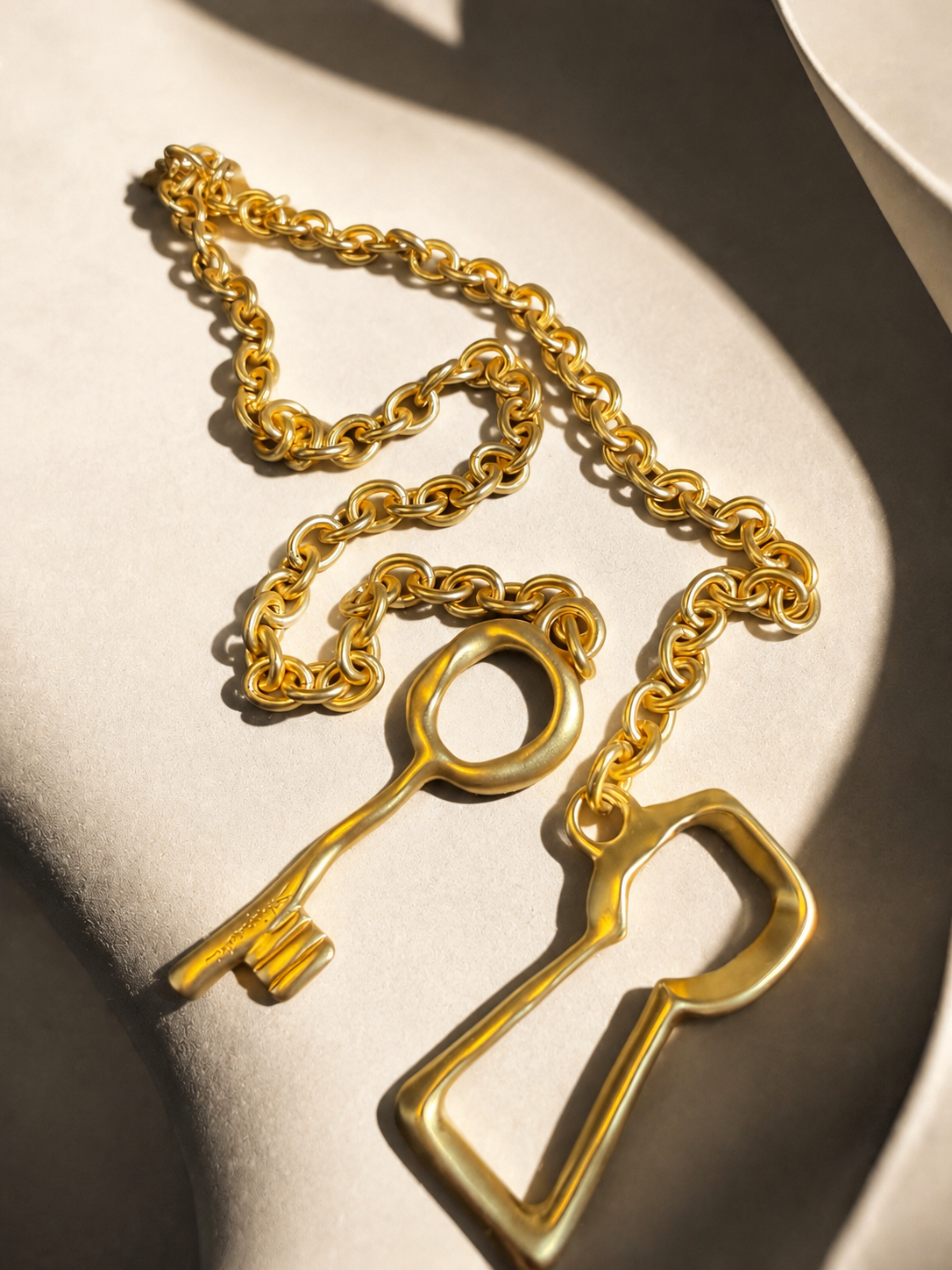
The gold-tone key-motif necklace supplies a recognizable shape and an open geometric detail. Against broad bands, it could create an intentional interruption. Against very fine stripes, compare whether its own chain texture adds more lines than you want. Use the pictured piece as an outline example until you obtain its total wearing length and designed adjustment range from the seller; those measurements are not supplied in the current product description.

Another option is to leave the front completely clear and use round earrings. That changes the framing beside the face while preserving the repeated design across the shirt. It is a different visual result, not a smaller version of the same necklace arrangement.
Check the cuffs and the placket too
Check the direction of the actual cuff panel after turning it back; it may differ from the sleeve. A contrasting button placket can also break the pattern. Include those details before adding a wrist stack or pendant. A plain pair of trousers can let you enjoy several deliberate crossings without requiring every accessory to be quiet.
For irregular motifs, the print-placement guide asks a related but different question about where motifs cluster. With stripes, keep returning to direction and spacing. Compare the necklace collection by outer line first, then choose the tone you enjoy.