
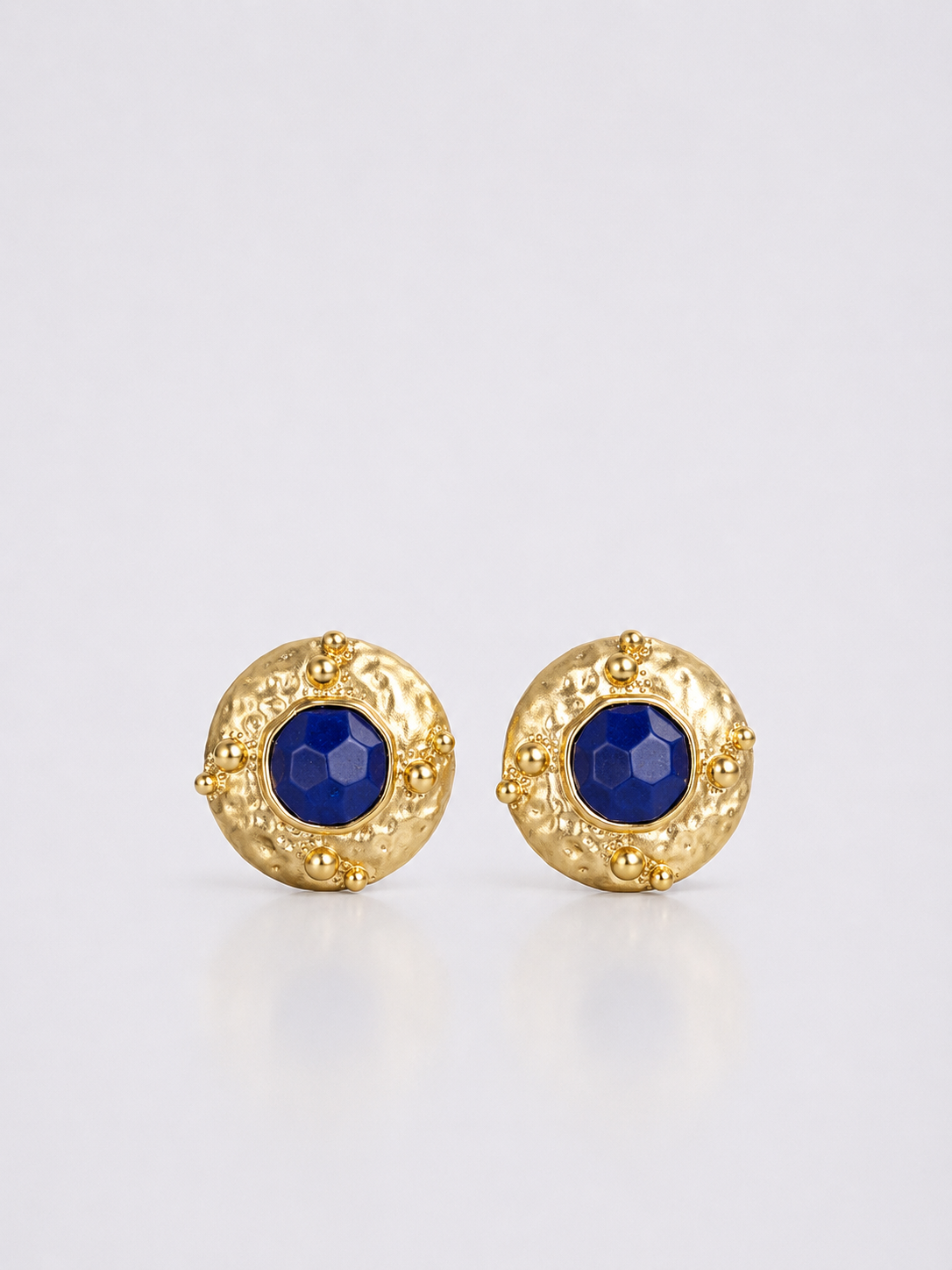
To style mismatched earrings, give the two sides one visible connection and one clear difference. A rounded shape beside a longer drop can work because the gold-tone borders relate, even when the colors do not match. You do not need several piercings or a purpose-made asymmetric set: start with two pairs you already own and try one earring from each.
The aim is not to disguise a lost earring. It is to make a left-right choice you enjoy. There is no requirement that your face, hair, or clothes be symmetrical first.
Choose what stays the same
Lay the candidates side by side on a plain cloth. Look for a connection you can actually see: a circular outline, a warm-looking border, a repeated blue, or similar surface texture. Pick one connection, not a list of reasons the pieces ought to belong together.
If both earrings are large, a shared outline is often easier to read than a tiny accent repeated somewhere in each design. If one is small, repeating its main color in the larger earring may be enough. These are starting points to compare, not rules about what you are allowed to wear.
Make the difference readable
Try changing shape, length, or color first. A compact round earring and a longer circular drop have an obvious difference in outline, while circles keep them related. Two almost-identical earrings with slightly different trim can produce a subtler result; you may prefer that, but it is a different effect.
Greenwich St. Jewelers' styling guide also treats shared color or shape as a useful connection. Our suggestion is to narrow the experiment: compare one deliberate change before adding a second.
A blue-and-purple example, using two existing pairs
The blue-center earrings below have rounded gold-tone fronts. The purple design adds a lower circular ornament beneath a smaller top. For an exploratory pairing, compare the blue design's single rounded front with the purple design's two-part circular outline. Their gold-tone borders offer a visual link. The photographs use different scales, so they do not establish which would hang lower on you; request dimensions before making that comparison.


These photographs show two separate product pairs, not a ready-made mismatched set or a photo of the proposed combination being worn. The blue listing is clip-on; the purple listing offers Clip-On and Pierced options. Select the attachment you actually use and confirm any missing weight or dimensions before buying. Front photographs do not show how a fastening will feel.
Compare both left-right arrangements
Try the longer earring on one side, then the other. Look straight ahead and turn your head slightly in each direction. A side part, a curl, or a tucked section of hair can reveal the two pieces differently; that does not make one arrangement wrong.
Use the shirt and hairstyle you plan to wear. A quick phone photograph can help compare the outlines, but remember that selfie previews may mirror the image. Judge the arrangement on you, not a supposed rule that the longer earring must go on the left.
Keep the parts you are not wearing together
Return each unused earring to its own pair's storage space. That small habit makes the experiment reversible and prevents the next outing from becoming a search for two missing halves. If you are uncertain what a product listing includes, the matched-pair buying guide separates quantity and intended orientation from styling choices.
Remove the earrings if either attachment hurts, pulls, or repeatedly catches. A successful visual contrast is not a reason to tolerate an unsuitable fit. When you want more options, browse the earring collection for one shape that answers a piece you already enjoy, rather than buying two new pairs simply to copy a formula.