
Mother-and-daughter jewelry can share a detail without being identical. A similar color, motif, or metal tone can connect two pieces while allowing each person to choose the category and scale they prefer. This guide focuses on adult wearers; jewelry intended for children needs age-appropriate product information and supervision.
Choose the connection together
Ask what both people would enjoy wearing. One may like a necklace and the other earrings. One may prefer a compact design and the other a broad statement. A shared detail can make those differences part of the idea rather than a problem to solve.
Do not assume the older person wants a more traditional piece or the younger person wants something delicate. Start with their actual choices.
Separate a matching set from two complete gifts
A retail “set” describes what is included in one product, not necessarily two independently complete gifts. Splitting a necklace and matching earrings may be welcome if both people agree, but it should not happen because the product photograph was mistaken for a bundle designed for two recipients.

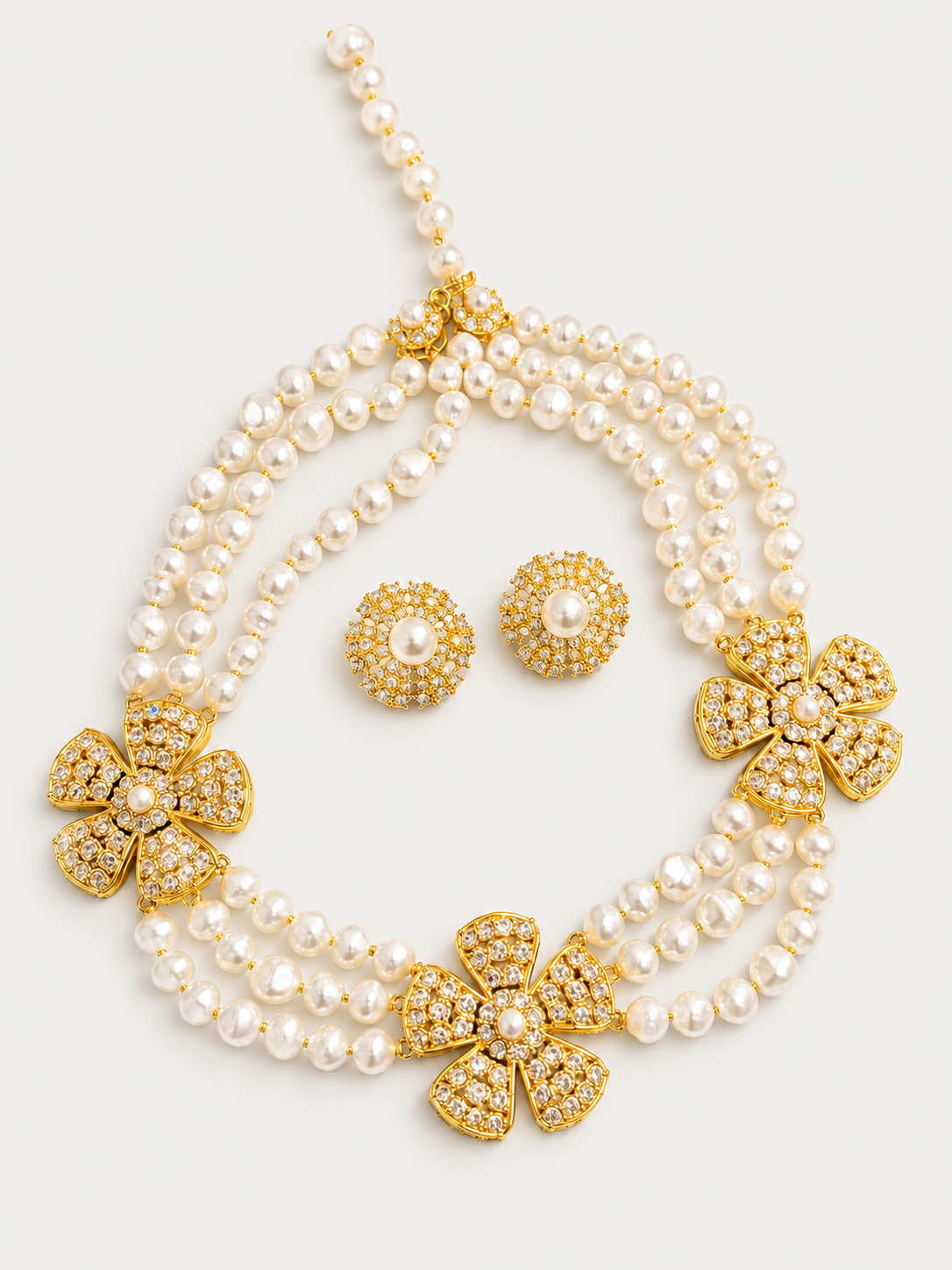
The pictured flower set includes a necklace and matching earrings. The shared finishes and accents show one way to connect the pieces, but the set does not establish separate packaging, individual return rights, or a special mother-and-daughter offer.
Keep fit decisions individual
Each person needs the right fastening and dimensions. Matching front designs do not establish matching comfort, and an adjustable description does not guarantee an appropriate range. Ask each wearer directly about earrings, necklace position, and any product requirements.
The gift fit checklist can help identify what still needs confirmation. Avoid secretly taking measurements or assuming one person's usual size applies to the other.
Let the meaning be specific
A shared flower might recall a garden, or a color might connect with a place you visited together. If that is your reason, say so. You do not need to claim the motif has an ancient or universal meaning to make the gift personal.
If the gift marks a difficult or sensitive family occasion, let the recipients decide how much of that story they want to wear publicly. Jewelry does not have to announce the relationship to everyone who sees it.
Plan two usable outcomes
Before purchasing, confirm the exact contents, options, current delivery information, and applicable return process. If buying separate pieces, keep each product identity and receipt clear. If sharing a set by agreement, decide who receives which component before the presentation.
Explore necklaces as one part of the comparison, not a compulsory choice for both people. The connection should survive even when the pieces are worn with entirely different outfits.