
Regifting jewelry is easiest to assess when you can tell the new recipient the truth without needing a cover story. Start with whether they would genuinely want the piece, what condition it is in and what you know about its history. “I have this and thought of you” can be a clear offer; pretending you purchased it specifically for them creates a different situation.
Choose between a regift and a disclosed pass-along
Emily Post's current regifting guidance favors letting the recipient know the item was received from someone else. Its more detailed regifting advice distinguishes a new, complete gift from an openly explained pass-along.
Used jewelry is not automatically unsuitable as a gift: the institute's wedding-gift discussion includes considered heirloom or previously owned choices. But previously worn is not the same as new. State which situation applies rather than relying on a fresh box to blur it.
Check four facts before making an offer
- Possession: is it yours to pass on, rather than borrowed or held for someone?
- Personalization: does it carry a name, date, dedication or family meaning that needs discussion?
- Condition and completeness: what is included, and what known limitations must be explained?
- Recipient interest: is there a reason to think this person wants it beyond your wish to clear space?
If any answer is unresolved, pause. A loan does not become a gift because it has been in your drawer for a long time. If a family piece's status is unclear, clarify it with the relevant people instead of announcing a new owner.
Describe the object without upgrading its story
Use facts you can support: when you received it if you know, whether you wore it, and what documentation accompanies it. Say “I do not know” about materials, maker or age when that is the truth. An old-looking design is not proof of historical provenance.
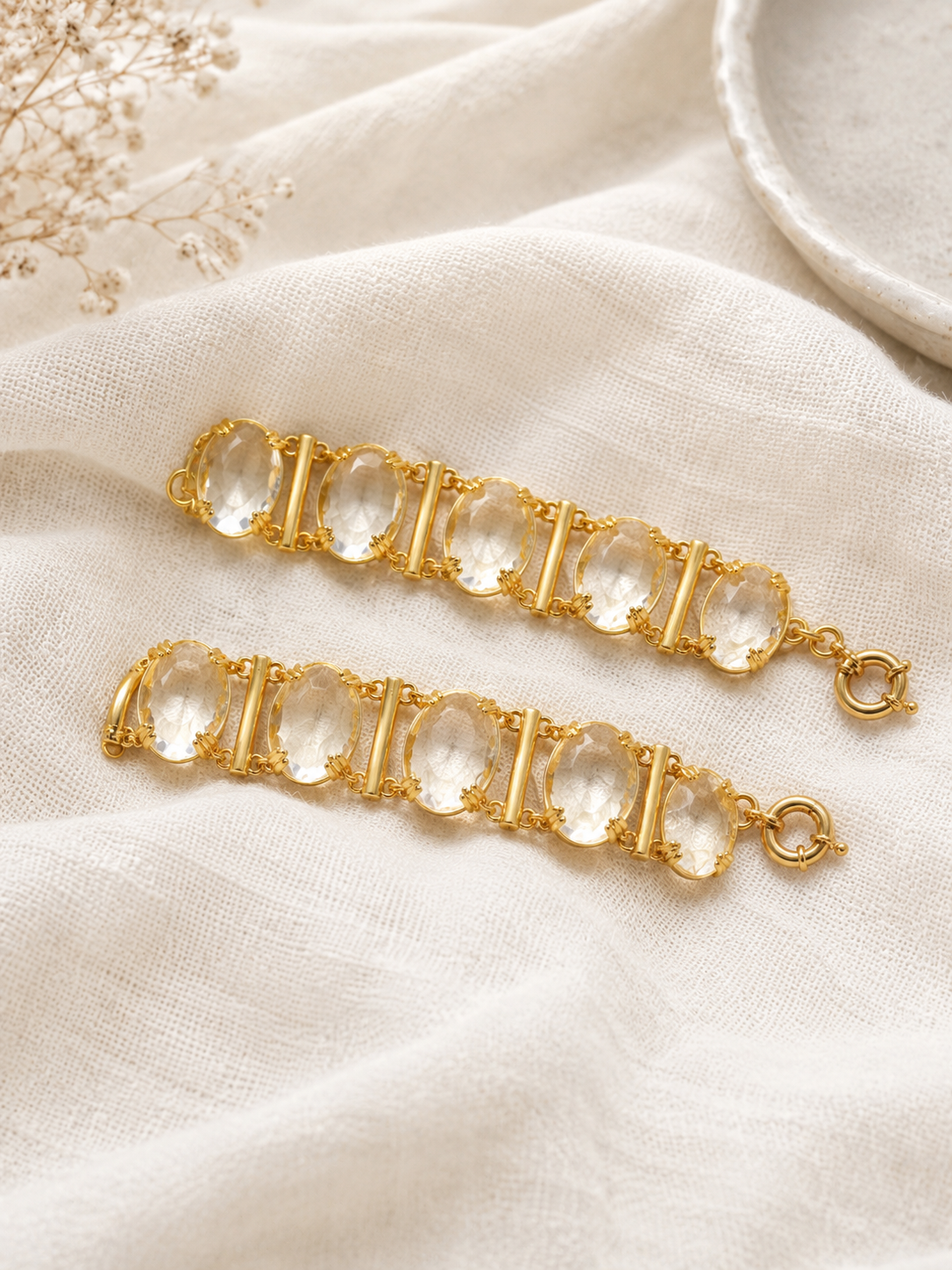
The clear-accent chain bracelet listing illustrates why component counting matters: its image shows two arrangements, not evidence that every purchase includes two bracelets. For your own pass-along, identify the actual piece or pieces being offered rather than using a similar photograph as an inventory.

Give the recipient a private, pressure-free choice
A hypothetical offer might be: “I received this bracelet as a gift and have not worn it. I remember you liked the design, so I wondered whether you would want it. It is completely fine if not.” Change every factual detail to match reality.
For a used item, say that directly. Do not ask for an immediate decision in front of the original giver or an audience. If the recipient declines, accept the answer without asking them to explain their taste or find another home for it.
Consider relationships without promising secrecy
A handmade, personalized or emotionally important gift may need a conversation with the original giver before you decide what to do. There is no script that guarantees nobody will feel disappointed. If your entire plan depends on the two people never meeting, reconsider it.
You do not need to share private details about the original giver to be truthful. “It was given to me” may be enough; a family story involving other people's grief, finances or conflict should not become part of a new gift presentation without permission.
Make presentation match the disclosure
Only after the offer is welcome should the gift-wrapping guide enter the plan. Packaging should not imply a retailer guarantee or an unused condition that you cannot support.
For an RJC purchase, consult the actual shipping and returns policy rather than promising that a second recipient can exchange it. An honest pass-along needs neither a fictional shopping story nor a service promise to be thoughtful.