
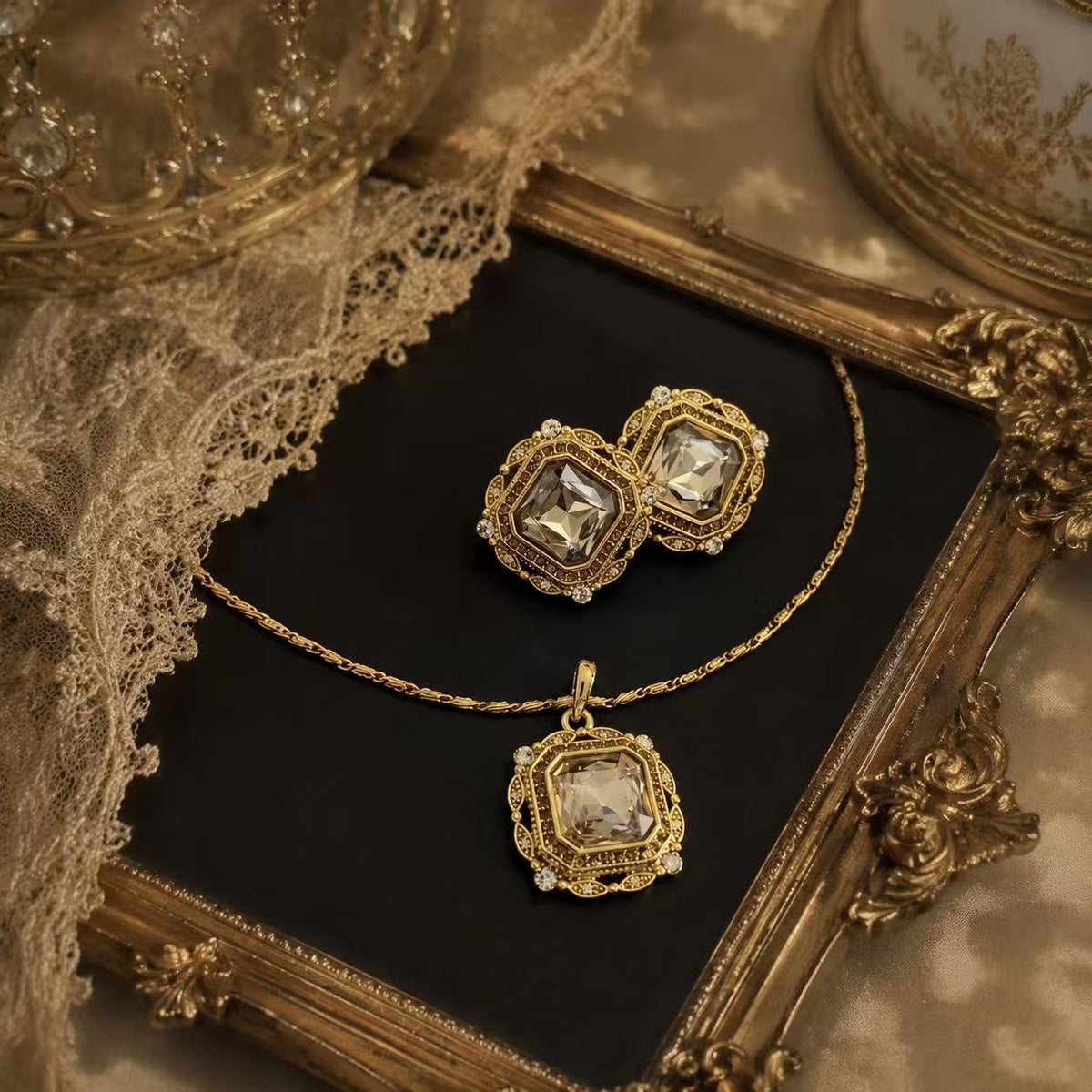
Rehearsal dinner jewelry should fit the jobs you have that evening. You might attend the ceremony rehearsal, help organize people, give a toast and then sit down to dinner. Or you may only join the meal. Those are different briefs even when everyone receives the same invitation.
Confirm where rehearsal ends and dinner begins
Ask whether the two activities are in the same place, whether you travel between them and whether there is a realistic changing interval. Do not build the plan around an imagined hour at the hotel if the schedule sends everyone directly to the restaurant.
Emily Post's rehearsal dinner guidance describes formats ranging from seated meals to casual gatherings. The event name alone does not establish a jewelry dress code. Use the invitation and the hosts' directions for formality.
Make a role-and-action worksheet
Write your role as an action rather than a relationship: “give directions,” “carry the rehearsal bouquet,” “speak,” or “attend dinner.” Being a sibling or parent does not, by itself, tell you which movements will matter.
| Part of the evening | Confirmed action | Accessory question |
|---|---|---|
| Rehearsal | Follow the coordinator's walk-through | Does anything interfere with the object or position assigned to me? |
| Arrival at dinner | Introduce guests or help with seating | Can I carry my notes and bag normally? |
| Toast | Stand, hold a microphone or lift a glass | Which pieces occupy the working hand or microphone area? |
| Meal | Sit and turn toward neighboring guests | Do I keep needing to straighten the jewelry? |
Let the toast determine any equipment change
If you are speaking, ask whether a microphone will be used. Shure's presenter guide notes that necklaces can contact a clothing-mounted microphone. That is a reason to discuss the actual setup, not to assume every toast requires bare ears or a bare neckline.
Practice with your notes and an empty glass. Emily Post's toasting advice favors preparation and brevity. Include the transition from seated listener to speaker so you are not managing a bag, a glass and a loose necklace at the same moment.
Choose components instead of assigning a uniform
The champagne-colored necklace and clip-on earrings set gives a concrete example. A guest attending only dinner might consider the coordinated arrangement. A speaker with a chest-mounted microphone might consider the earrings alone, subject to their own fit and fastening requirements.

This is a difference in duties, not a hierarchy of who should look more dressed up. No relative is obliged to wear a larger set because of their position in the wedding. If the hosts have requested a shared detail, confirm it before purchasing and distinguish that request from your own assumptions.
Finish with a no-rush version
For a hypothetical schedule with rehearsal ending just before dinner travel, choose one version that works across both. If a change is genuinely useful, identify the place and the person who will hold your attention or belongings while you make it. If those details are vague, simplify the change rather than promising yourself you will find a spare moment.
The set-or-earrings comparison addresses a different outfit decision. Here the sequence of duties comes first. Browse the necklace collection only after deciding whether a necklace has a workable role during your evening, including the parts before dinner.