
When buying jewelry on sale, compare the exact item you want, the complete payable cost, and the terms that matter if it is unsuitable. The largest advertised discount is only one part of the decision.
A lower item price can be offset by shipping, an unwanted extra purchase, or a return restriction that does not fit your needs. Start with the piece you would choose without the promotion, then see whether the offer improves that purchase.
Keep the product requirement fixed
Write down the size, color, fastening, and selling unit you actually need. A sale on size 6 does not help someone who needs size 7. A single earring is not the same purchase as a pair, even when the front photograph looks similar.
Also distinguish a complete set from a separately sold component. Compare like quantities and the selected option's price, rather than the most attractive price appearing anywhere on the product page.
The FTC's online-shopping guidance recommends noting exact product details and comparing the total cost and deal conditions. That approach keeps an appealing banner from changing the question halfway through browsing.
Work out the amount you will actually pay
Consider two fictional offers for an equivalent item and size. These invented numbers illustrate the arithmetic; they are not RJC prices or another merchant's quote.
| Offer | Item | Shipping | Subtotal |
|---|---|---|---|
| A | $40 | $8 | $48 |
| B | $44 | $0 | $44 |
Offer B has the higher item price and the lower subtotal. Before paying, add each offer's actual taxes and any other applicable fees. If those amounts remain unknown, the final comparison is unfinished.
Apply a coupon only when the selected product qualifies, and check whether it replaces another promotion. A code found in a search result is not proof that the checkout will accept it.
Decide whether the extra item has a purpose
A free-shipping threshold can be useful when another wanted item already belongs in your order. It can also encourage you to spend more to avoid a smaller shipping charge.
Compare the checkout with and without the addition. Keep it only if you independently want it and the complete purchase fits your limit. “Free shipping” describes one charge, not the total amount spent.
For an RJC order, review current shipping information and the final checkout options rather than borrowing another store's threshold or service terms.
Read sale-return conditions before committing
When reviewed on October 13, 2026, RJC's posted refund policy stated:
“we cannot accept returns on sale items or gift cards.”
That is the merchant's dated policy wording. Confirm whether your specific offer is classified as a sale item and how the applicable terms address your question before ordering. Do not assume a general return window automatically includes every discounted purchase.
BaubleBar's policy reviewed on the same date also identified non-returnable categories and non-refundable original shipping fees. Its definitions should not be transferred to RJC or another seller. Read the actual terms for the chosen purchase.
Use a pictured product without guessing the missing facts

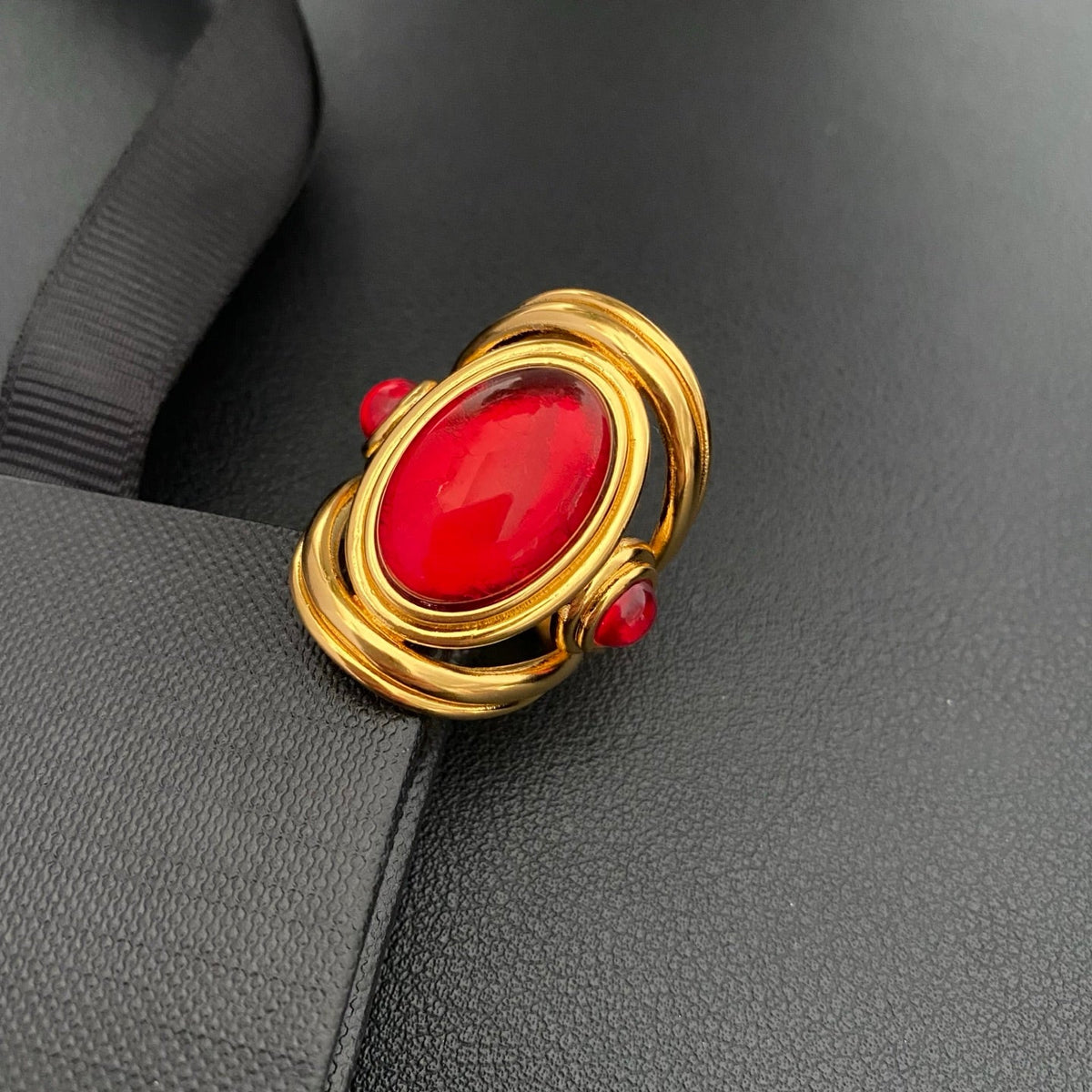
The pictured ring has a red oval center and two smaller red side accents. Its current product description contains sale and original-price language. Reopen the selected size and checkout amount when making a purchase rather than treating a price saved elsewhere as today's offer.
The photograph helps you assess the design. It cannot confirm finger fit, the history behind a reference price, or whether an offer meets your return requirement.
Buy the suitable offer, or leave it
If two offers both meet the product requirements, compare their verified totals and relevant conditions. If one is missing the size or information you need, its discount does not fix that gap.
For an unresolved RJC option or sale-policy question, ask with the exact product link. A promotion is a good reason to revisit a suitable piece; it is not a reason to replace a necessary fact with a guess.