
ABC analysis groups inventory by contribution to a chosen measure, often sales revenue. It can help a jewelry boutique decide where to investigate stock, but an A label does not prove high profit and a C label does not prove an item should be discontinued. Start by defining the period and measure.
Choose one consistent revenue basis
Use the same report, dates, currency, and treatment of discounts and returns for every row. Shopify's ABC analysis guide describes commonly used revenue bands of roughly 80%, the next 15%, and the remaining 5%, while noting that these thresholds are guidelines rather than fixed rules.
If you use a platform's built-in report, preserve its definitions. If you calculate a custom version, label it as custom rather than suggesting it is the same report.
Build a transparent fictional example
| Illustrative item | Revenue | Share | Cumulative share |
|---|---|---|---|
| Earring style A | $500 | 50% | 50% |
| Brooch style B | $300 | 30% | 80% |
| Necklace style C | $150 | 15% | 95% |
| Bracelet style D | $50 | 5% | 100% |
With those simplified bands, the first two items are A, the third B, and the fourth C. These are invented figures, not Rustic Jewel Co results. In real data, record how you handle an item that crosses a threshold; do not silently split one item between categories.

Review exposure before judging the lower group
A newly launched item may have had only a few days to sell. A variant may have been unavailable. A piece shown only in a poorly lit display may not have had the same opportunity as one featured prominently. Add launch date, in-stock time, and placement notes to the review.
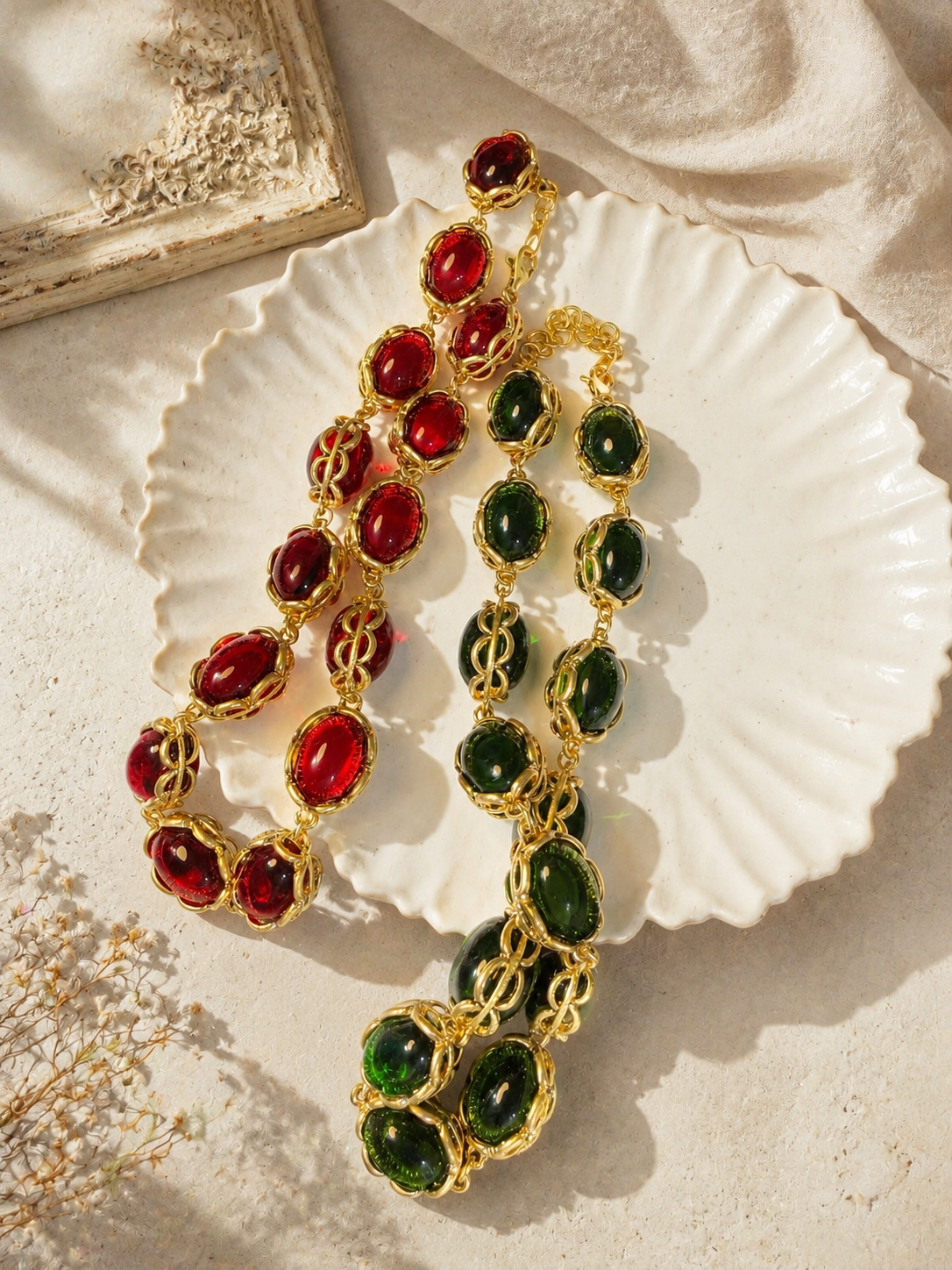
The pictured necklace's red and green options illustrate another issue: a product's combined revenue can hide a weak color or fastening option. Keep variant evidence available before increasing the whole range.
Add cost and return information
Revenue share is not margin. A high-revenue item may have substantial costs or frequent returns. A lower-revenue item may still serve a useful assortment role. Compare the relevant cost and return evidence without assigning those outcomes from the ABC letter alone.
The markup and margin guide helps keep those concepts distinct. An ABC table is a sorting tool, not a complete profit statement.
Record the action as a question first
For each group, write the next evidence needed: confirm availability, check presentation, review a variant, or investigate returns. Do not automatically reorder every A item or discount every C item.
Use wholesale inquiries to confirm current supply details once your review supports a specific request. The classification makes the conversation more focused; it does not decide the purchase for you.