
When jewelry comes back from repair, start with the agreed work and your intake photographs. A brighter surface is not evidence that every functional problem has been resolved, and an unchanged old mark is not necessarily unfinished work if its removal was never agreed.
Your role at handover is to recognize the object, understand the completed work and raise specific questions. Technical assessment of a repair belongs with an appropriately qualified professional, not with an improvised tug, bend or scratch test.
Reconcile the returned objects first
Open the container on a clear surface. Match the piece, its partner if applicable, and any retained detached components to the intake list. Distinguish parts reattached to the jewelry from parts returned separately and parts that the provider says were replaced or removed.
If the handover happens in person, do this with the provider present. If the jewelry was returned by post, photograph its arrangement before moving pieces around. Keep packaging while a discrepancy is being clarified; it can explain where a small component was placed.

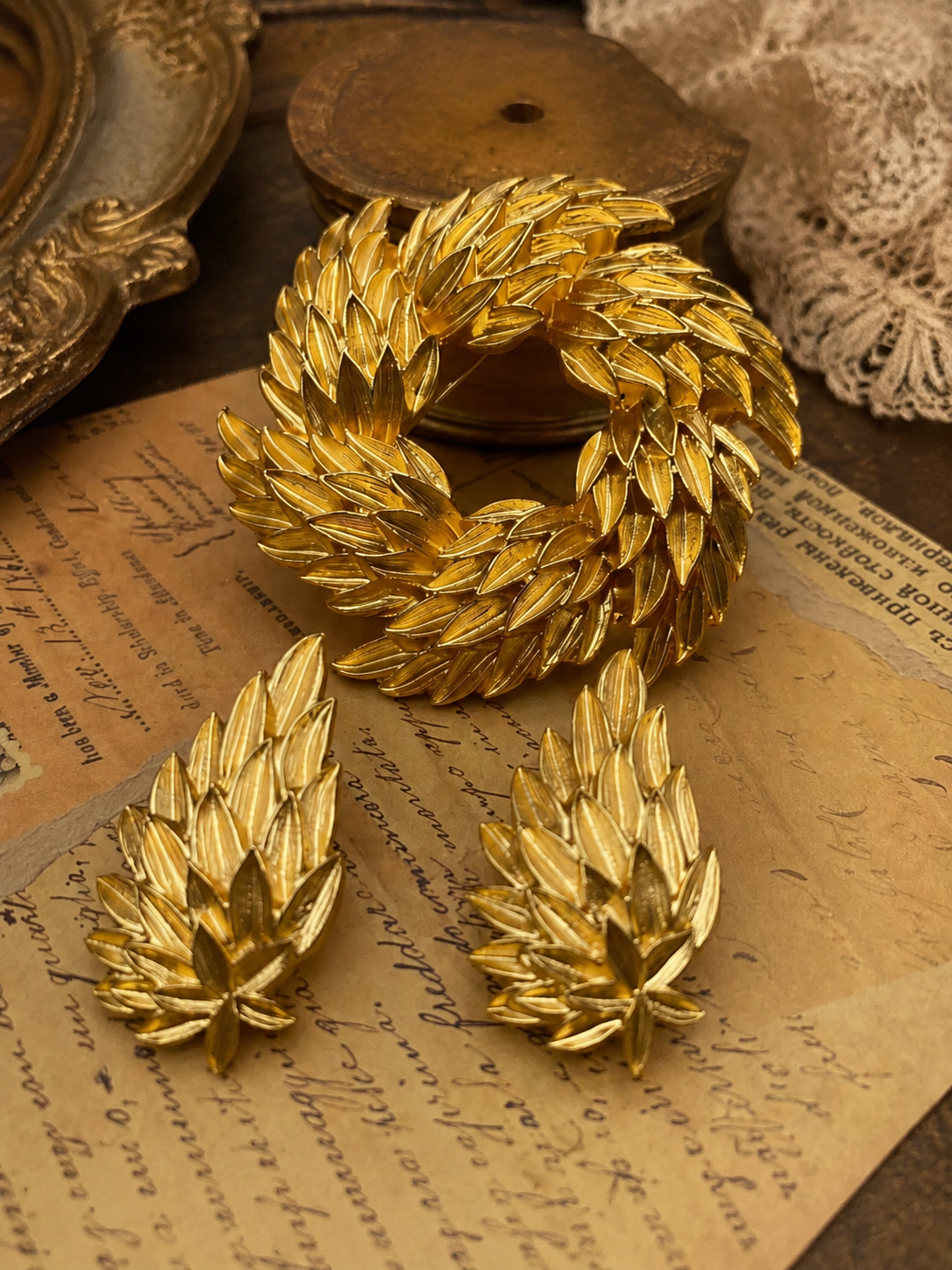
The leaf brooch and stud-earrings set offers a simple counting example: the brooch and the two earrings are separate physical components within an identified set. A handover note should identify which component received work. This illustration does not suggest that the catalog set has been repaired.
Compare the outcome with the actual brief
Use three columns: agreed task, provider's completed-work note, and your question if any. For a fictional clasp repair, “restore closure function” and “remove all surface wear” are different tasks. If only the first was agreed, the remaining wear should be discussed as a separate observation.
Compare before and after photographs from similar directions and lighting. A highlight can hide a mark or make a replacement accent look different. Record the specific location of a concern instead of concluding from one differently lit photograph that a material has changed.
The American Institute for Conservation's hiring guidance recommends a treatment report and distinguishes structural assessment from cosmetic appearance. Conservation and commercial jewelry repair are different services, but requesting a clear account of completed work is useful in both.
Ask the provider to explain function and limits
For a repaired fastening, ask the provider to demonstrate the intended operation and explain any restrictions. Ask whether the complete piece was inspected or only the named repair area. A repaired catch does not automatically mean every decorative attachment was assessed.
Do not repeat a fault demonstration by pulling harder. If something catches, moves unexpectedly or fails during ordinary handling, stop and describe the observation. GIA's workmanship assessment article shows why evaluating construction involves more than a surface impression. It is not a checklist that lets an owner certify hidden joints at home.
Get care advice for the piece as returned
Ask what materials or components were added, whether any finish changed, and whether the repair changes cleaning, storage or use. If the provider specifies a waiting period or another condition before use, record their exact instruction rather than substituting a generic internet timetable.
A useful question is: “Does my previous care routine still apply to the whole piece, including the repaired area?” Keep the written reply with the treatment note. Do not assume that a replacement accent shares the original's material merely because its color is close.
Close the record or leave a clear open question
Save the returned-state photographs, completed-work note and date together. Retain earlier records; the object now has a history of change rather than a single final image. The CCI's documentation guidance supports maintaining the connection between an object and its records.
If a discrepancy remains, describe it in one specific message to the provider and agree on the next assessment before attempting any correction. The repair consultation guide covers the earlier intake packet. For pieces in the brooch collection, product photographs can identify designs, but they cannot certify the outcome of an unrelated repair.