
Describe the problem without diagnosing the repair
A useful costume jewelry repair inquiry tells the provider what you observed, what parts you still have, and what result you want. It does not prescribe soldering, glue, replating, stone replacement, or any other bench method. Construction and materials may be unknown, and the repair professional may need direct inspection before confirming what is possible.
Open a one-page consultation brief with five lines: item type, observed problem, when it happens, detached or missing parts, and desired outcome. Write “pin does not remain closed during a gentle stationary check,” not “spring needs replacing.” Write “one round accent is absent from the upper-left position,” not “replace one pearl,” unless reliable product documentation establishes that material.
If you need consistent condition words, use the separate jewelry condition glossary. Then assemble enough evidence for a repair professional to evaluate scope. Do not clean, bend, tighten, pry, glue, or test a damaged area before taking the intake photos.
Make a photo packet with up to eight applicable views
Choose up to eight views where applicable; do not move or operate a damaged area just to complete the list. Photograph the piece on a plain, nonreflective background in indirect light. Keep the original files so the provider can zoom in. A costume-jewelry repair specialist currently asks prospective clients for a photo, description of what is broken, and timing information; a mail-in repair service likewise separates the initial request from professional inspection and quote approval. Your packet should make that first request specific without pretending a photograph replaces inspection.
- Whole front: show the complete silhouette and every visible accent position.
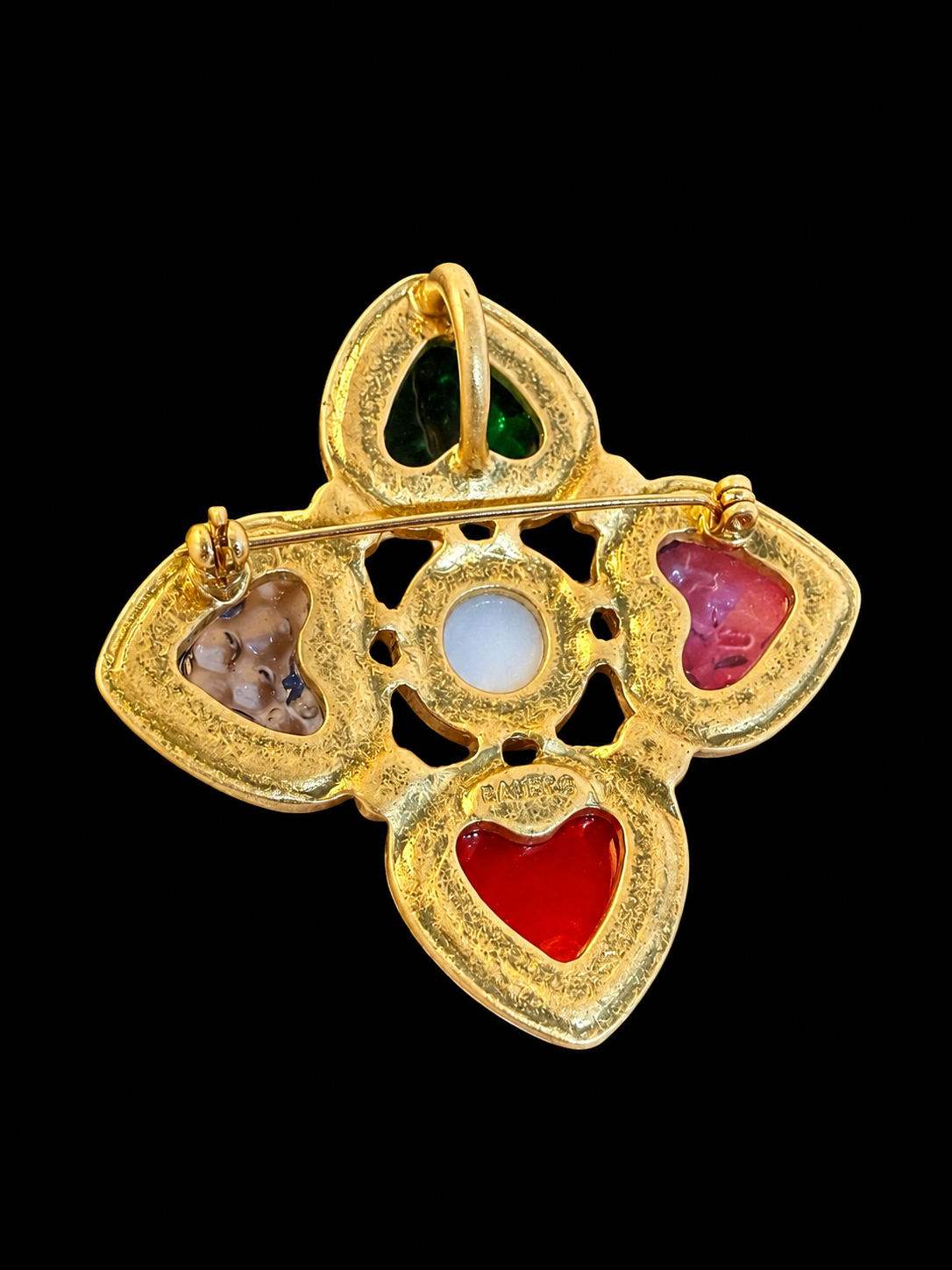
- Whole back: show closures, loops, posts, clips, pins, chain ends, and attachment points.
- Left side: show depth and any lifted component without pressing it down.
- Right side: reveal whether the issue appears isolated or repeated.
- Observed problem: fill the frame with the broken, loose, absent, or misaligned area.
- Matching area: show an intact counterpart that may help the provider understand shape and placement.
- Detached parts: photograph every retained component beside the piece, separated and counted.
- Scale view: place a ruler beside the item without covering or pressing on it.
Name the files in order, such as 01-front, 02-back, and 05-problem-close. Add one sentence under each image. If movement is part of the problem, ask whether the provider wants a short video; do not repeatedly operate a weak clasp or flex a failing joint just to record it.
Inventory present, detached, and missing components
Create three counts: visibly present, detached but retained, and missing or unknown. For a pair, photograph both pieces even when only one appears affected. A matching earring, repeated link, or opposite side can provide shape and position evidence, but it does not establish hidden construction or exact material.
Place detached parts in separate labeled containers and follow the provider's packing instructions before mailing anything. Record whether an accent is complete, chipped, or only partly present; whether a chain segment includes its rings; and whether an earring back or brooch safety piece is original, replacement, or unknown. Ask whether removed or unused parts will be returned.
For a brooch, the brooch-clasp check can help identify the pin, catch, hinge area, and stationary observations to photograph. Stop there. A repair inquiry is not permission to force the pin through fabric or manipulate a damaged mechanism.
Mark construction and material fields as documented or unknown
Make a two-column evidence table. The first column contains exact seller, receipt, package, or product-page wording. The second contains only visible construction: “pin clasp shown,” “pendant loop shown,” “three linked sections,” or “thread visible between beads.” If no reliable document names the metal, finish, stone, adhesive, thread, or plating, write unknown.
A current gold-tone heart glass-style convertible brooch pendant is documented as a convertible piece, and its back view shows both a pin clasp and pendant loop. That makes the back image useful for explaining two functions in an inquiry. It does not establish how either component could be repaired, and the current item is not presented here as damaged.

For a pre-purchase inspection of both functions, use the convertible brooch-pendant checklist. In a repair consultation, use the same construction record only to identify what the provider must assess.
Ask for capability, scope, and approval boundaries
Repair providers do not all accept costume jewelry or every construction. One current specialist explicitly lists costume-jewelry work, while another service says fashion-jewelry repairability varies and begins with photos. Ask the provider to answer these questions before you ship or leave the item:
- Do you evaluate this item type and documented or unknown construction?
- Is the photo response a preliminary opinion or a firm scope?
- Must the item be inspected in person before price and feasibility are confirmed?
- What work is included, excluded, or optional?
- If an exact replacement component is unavailable, will you pause and show alternatives before proceeding?
- Could the proposed work change the visible finish, color match, movement, or function?
- What happens if additional damage or an unknown construction is found?
- Will added work or cost require new written approval?
A current repair-scope checklist recommends clear pre-repair photos, included and excluded work, itemized pricing, timing, risk notes, and approval for added work. Those are planning fields, not guarantees that a costume piece is repairable or that a replacement will be invisible.
Send one concise consultation brief
Use this structure: “I am requesting an evaluation, not authorizing work. The item is a [documented item type]. I observed [specific problem] at [location]. I retained [count and description] and believe [count] may be missing, but material and attachment method are unknown. The attached photos include up to eight applicable views: [list the views and filenames supplied]. My desired outcome is [function or appearance]. Please confirm whether you accept this construction, what inspection is required, the proposed scope and exclusions, visible-change risks, price basis, timing, and written approval process for any change.”
Compare replies by completeness rather than confidence. A useful response distinguishes preliminary photo review from hands-on diagnosis and states what remains unknown. Browse the brooch collection only for current product documentation or comparison context—not as proof that a damaged item has the same construction.
Your consultation packet can include up to eight labeled views where applicable, a component count, documented-versus-unknown fields, one desired outcome, and a question list. It helps a professional define the work while keeping repair method, feasibility, replacement match, price, and performance unclaimed until that provider evaluates the actual piece.