
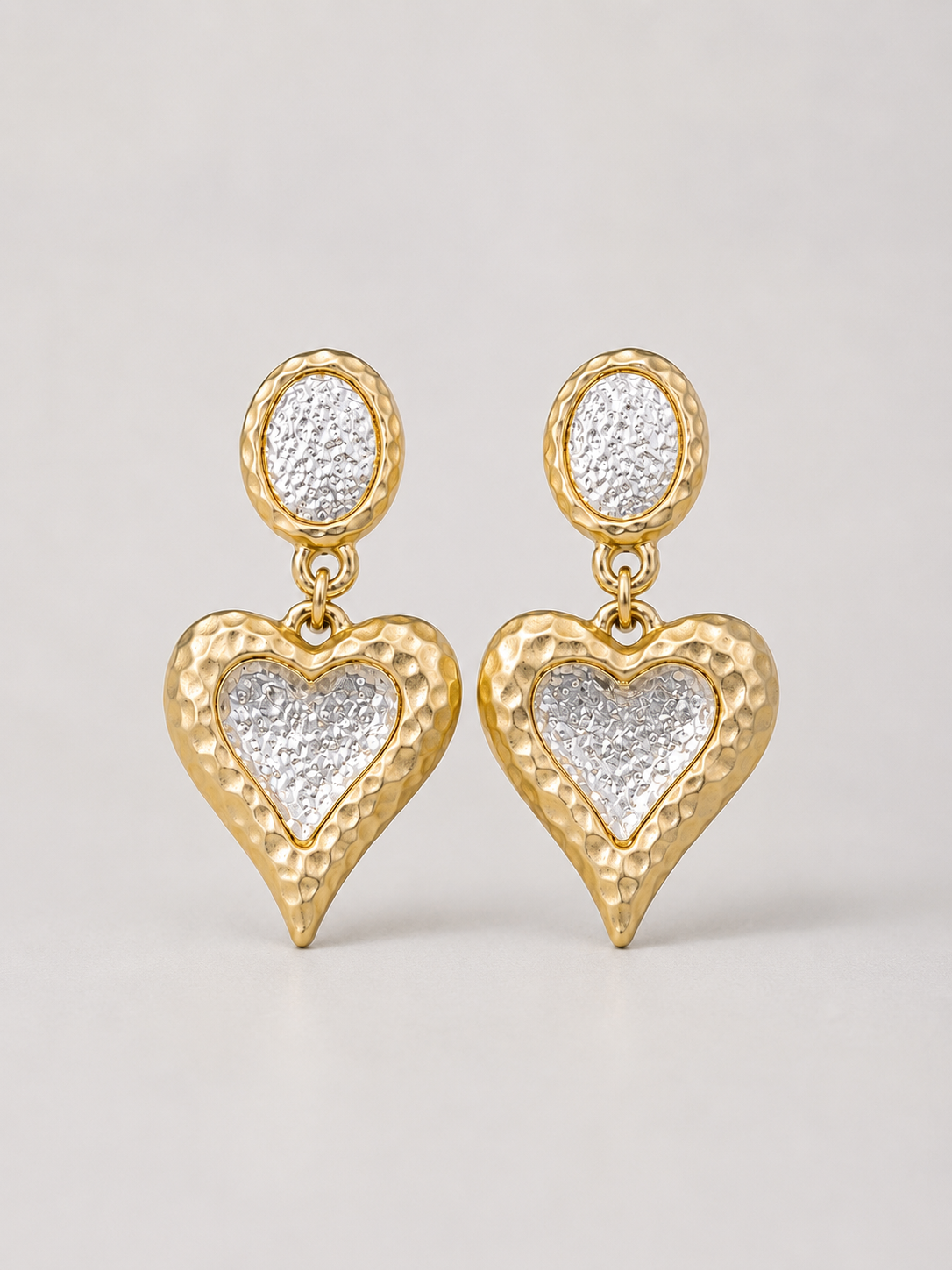
For curly hair, choose earrings by where your curls sit and move, not by a blanket rule that you need large hoops or long drops. A compact design can be visible beside a tucked section; a long earring can disappear inside loose hair. Your everyday hairstyle is the useful starting point.
Try the hairstyle before choosing the earring
Wear your hair down, pinned back, or half-up as you actually intend. Look at the space around the lobe and below it. Notice whether curls fall in front of the ear, behind it, or across the fastening when you turn.
Do not stretch or rearrange curls into an unfamiliar position just to make a product photo's styling work. If you like a tucked-back look, try that deliberately; if you prefer your hair loose, choose jewelry for that version.
Choose an outline you can recognize
A broad, simple silhouette can remain readable even when partly framed by hair. Fine strands or intricate openwork may create a more subtle effect. Compare both from a normal conversational distance instead of judging only a close-up.
Color can add visibility, but contrast is personal to the complete outfit and hair. You do not need to apply a fixed chart to your hair color or texture.

Inspect the parts that touch hair
The pictured heart drops have a defined front outline, but the front image does not show every potential contact point. Review reverse and side views where available. Ask about the fastening if it is unclear, and assess projecting edges before wearing the earrings with loose hair.
No earring shape is guaranteed not to catch. Turn slowly during a try-on, and stop if hair meets the piece. Free the strand gently rather than pulling the earring through it. Repeated contact is a reason to choose another pairing.
Separate appearance from comfort
“Statement” describes visual presence, not a standard weight. A small-looking earring may still feel substantial, and a larger outline may be made differently. Use the actual weight and a pair you already find comfortable as comparison points, without assuming identical comfort.
The guide to earring weights explains why per-piece and per-pair figures must be kept separate. If the seller cannot provide a needed detail, keep that uncertainty in your decision.
Make a two-version comparison
Photograph the earrings with your chosen hairstyle, then try either a more compact pair or one small change in hair placement. Compare visibility and contact, not which version follows a trend. Include glasses, a scarf, or a collar if you will wear them.
Explore earring shapes after identifying the space you want them to occupy. The goal is to enjoy the curls and the jewelry together, not to make one behave like a different material.