
Displaying jewelry by price point is not the same as setting prices. It is a customer-navigation decision: can someone understand the range of choices without asking what every item costs or mistaking one variation for another?
Start with verified product facts
Before making a sign or shelf group, verify the current product title, selected variant, and displayed price in the selling system. Do not group items from a memory, a supplier image, or an old line sheet. A display is only as clear as the records behind it.
Choose one organizing rule per area
A small fixture can be grouped by price point, color story, category, or gift purpose. If price point is the rule, use it consistently so a shopper can tell why a piece sits in that area. Keep the category labels and product facts readable beside it.
Define the budget boundary before grouping pieces
Start with the shopper’s question: “Where can I compare pieces within my budget?” A sign describing a starting price answers a different question from a sign describing an upper limit. Write down the range, currency, and whether each boundary belongs to this group or the next before assigning pieces. Use your store’s actual approved price records; this guide sets no price bands or new prices.
Assign the exact selected option to the appropriate group under that rule. A group sign helps someone find candidates; it does not replace the individual ticket identifying the piece, option, selling unit, and current approved price. If a ticket needs correction, use the separate price-ticket correction guide before relying on it.

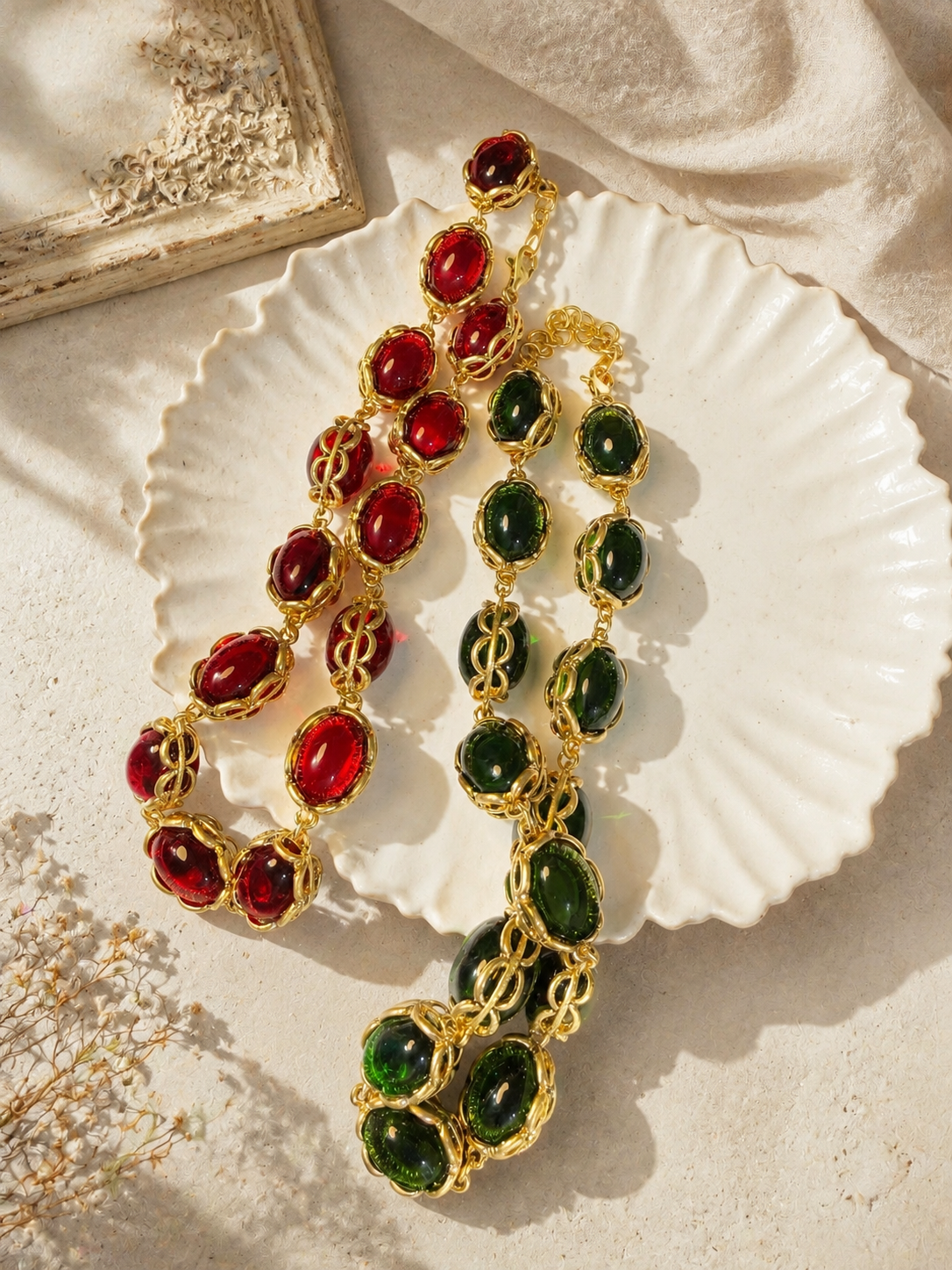
The linked necklace lists Ruby Red and Emerald Green as separate color options. The gallery view showing both colors does not make them a two-necklace selling unit. Check the exact selected option and its current approved price when assigning a group; do not use one image or an old line-sheet row to stand for every offer.
Make the signs answer the next question
Signs can identify a price group, a collection name, or a gift idea. They should not add unsupported material, provenance, discount, availability, or performance claims. Put specific product information where the shopper can connect it to the exact piece.
Observe before changing the whole display
Try one small section with a concrete test: can someone name a budget, find the relevant group, and compare two exact options without having to infer their unit or price? Note where the group label leaves a question unanswered before changing the rest of the fixture. A change in display does not by itself prove a change in sales. For a broader fixture and layout discussion, use our small-boutique jewelry display guide.
Keep commercial questions on the right route
If you need wholesale or private-client inquiry support, use the Wholesale and Private Client Inquiries page. Terms, availability, lead time, and pricing arrangements must be confirmed directly rather than inferred from this guide.