
Before inviting guests to a jewelry trunk show, agree on three things with the host: who takes payment, which pieces customers can take home, and how you will count the stock at the end. An attractive display will not resolve a disputed sale, a missing earring, or an order recorded in the wrong fastening.
Decide what guests can buy
A trunk show brings a visiting designer or vendor's range into a shop for a limited customer-facing event. For planning, the important question is what happens when someone points to a piece and says, “I'll take it.”
Mark items that are available to take home separately from samples used to place an order. For a sample order, staff need the exact option, confirmed price, expected fulfillment timing, and the seller's applicable terms. An attractive sample is not evidence that another unit is ready to ship.
Make the invitation equally clear: date, location, opening hours, whether an appointment is needed, and what will actually be on display. Confirm who is attending: a designer appearance and a visit from a representative are different promises, a distinction also raised in JCK's trunk-show reporting.
Give checkout and customer support clear owners
Choose which business processes the payment and appears on the receipt. Decide who can approve a discount, how the host is compensated, and who answers a customer after the event. A buyer should not have to contact two businesses to find out where an order is.
Write down how refunds, returns, delayed orders, and a canceled event will be handled under the agreed terms. These details belong in the host-vendor agreement, not in an improvised conversation over the display table. Get professional advice where the agreement, tax treatment, or local requirements need it.
Record the fastening, not just the design name
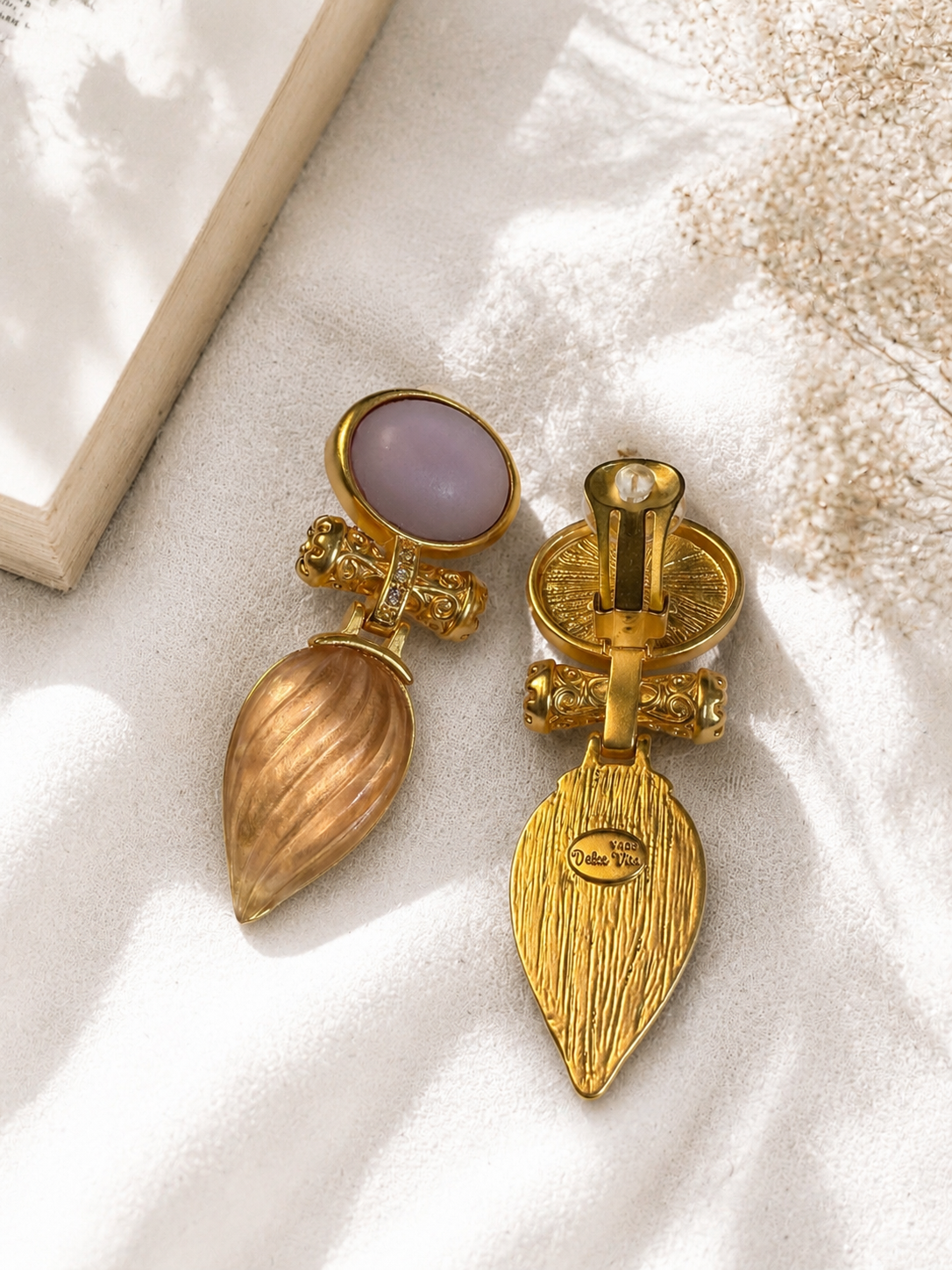
Jewelry options can look similar from the front. The gold-tone amber-accent statement earrings, for example, have separate Clip-On and Pierced choices in the product listing. The product name alone is not enough to record a guest's selection.

For an event order, record the product or SKU, fastening, quantity, price, and the customer's agreed delivery or collection arrangement together. Label whether the quantity means pairs, complete sets, or individual pieces. The jewelry order checklist provides more detail on exact variants and counts.
Plan handling before the first guest arrives
Agree who supervises the display, helps with try-ons, and returns each piece to its labeled place. Keep a complete earring pair or jewelry set together as it moves between tray, mirror, and checkout. Follow the product's care and handling instructions rather than applying an unconfirmed cleaning method between guests.
The host and vendor should also agree on storage, transport, and responsibility for missing or damaged pieces. Ask the relevant insurer whether the proposed location, transit, and custody arrangements are covered; do not assume an ordinary shop policy covers a visiting collection.
Count first, then pack
Here is a simple imaginary closeout: ten pairs arrive, three leave with paying customers, one remains clearly labeled for an agreed pickup, and six return to the vendor. All ten are accounted for. The pair awaiting pickup needs its own customer and custody record rather than disappearing into either the sold-and-collected or returned count.
Orders placed from a display sample are a separate list. They do not automatically reduce the physical count of samples on the table. Compare transactions, customer orders, held items, and returned stock before either team leaves, and note any discrepancy while both people can still examine it.
For a reusable starting point, adapt the small-boutique jewelry inventory guide. For current Rustic Jewel Co purchasing information, use the wholesale inquiry page. This planning guide is not an announcement of an RJC trunk-show booking service.