
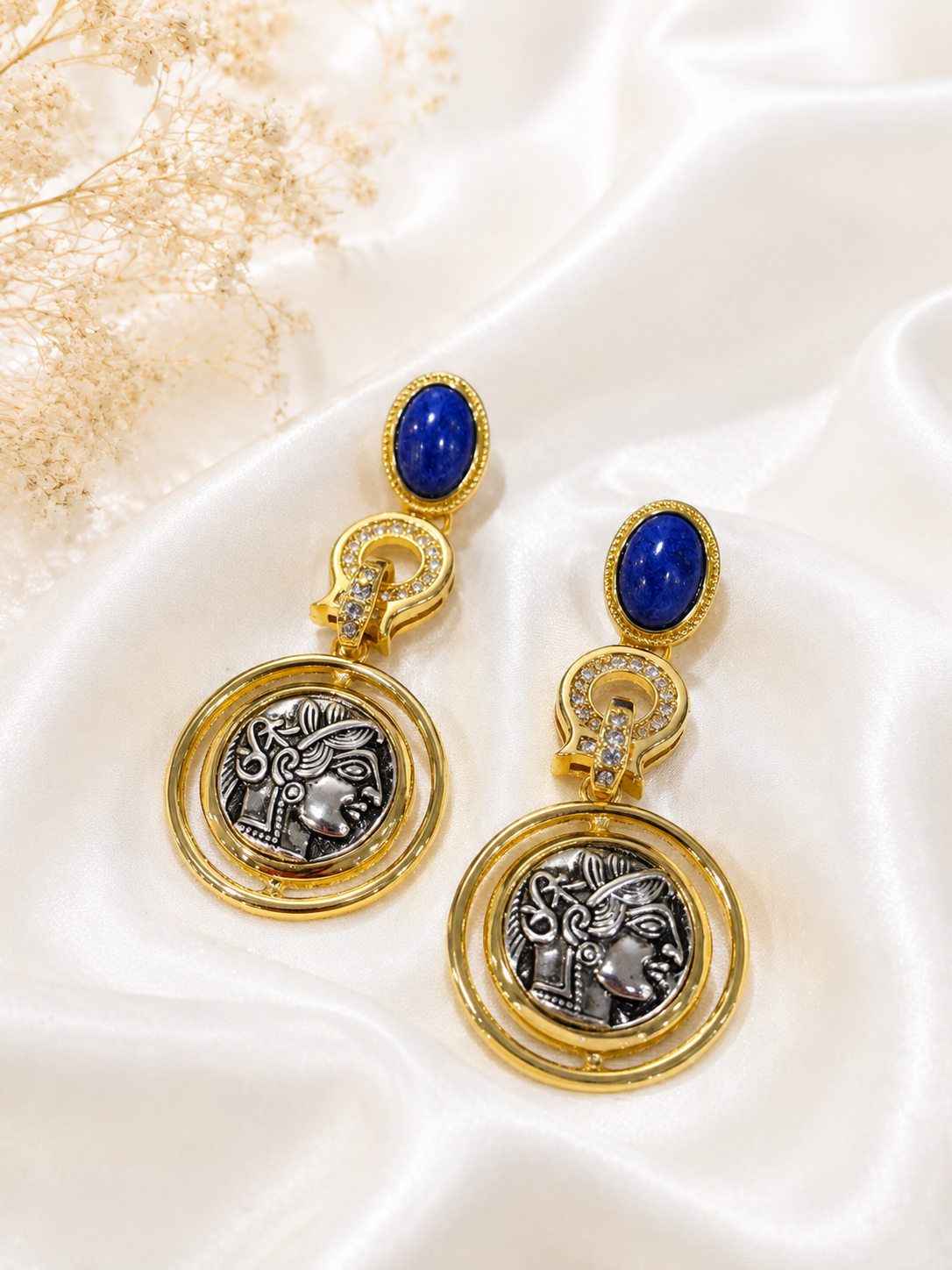
Lapis lazuli does not have to show obvious gold-colored flecks, and flecks in a blue accent do not prove that it is lapis. The rock's mineral mixture can vary, while other materials can imitate parts of its appearance. Use white patches and metallic-looking marks to describe the design you see—not to authenticate it. If actual lapis is a purchase requirement, ask for the material and treatment description of the specific accent.
Lapis is a rock with variable visible ingredients
GIA describes lapis lazuli as an aggregate of minerals, including lazurite, calcite, and pyrite in varying amounts. Lazurite contributes the blue color; calcite can appear as white areas, and pyrite can appear as metallic-looking flecks. GIA also describes lapis with a uniform body color and no visible pyrite or calcite.
That variation is the reason a single preferred appearance is not an identity rule. A buyer may like a largely uninterrupted blue area, another may prefer pale streaks, and another may enjoy scattered metallic-looking marks. Those are visual preferences. None supplies a complete material description.
The distinction is especially useful when looking at a small mounted accent. You are seeing only the photographed surface, in a particular setting and light. An absence of clearly visible flecks in that image is not evidence that a required mineral is absent from the entire object, nor is a bright mark enough to identify its substance.
Three tempting fleck rules fail
“No gold flecks means it is not lapis.” Visible mineral proportions vary, so that rule excludes appearances that GIA's description allows. If you prefer flecks, ask to see the particular item more clearly; do not convert that preference into a definition.
“Gold flecks prove it is lapis.” A gold-colored mark in an ordinary product photograph has not been identified as pyrite. Color and shine alone do not settle what it is. Even a mark that resembles a familiar inclusion is not a report about the surrounding blue material.
“White markings prove it is natural lapis.” In a Winter 1983 study published by GIA, George Bosshart described cobalt-colored glass with white markings that resembled lapis. Laboratory examination established the material. This is a historical case showing that a visual feature can be imitated, not a claim about how all blue jewelry is made today.
Instead of applying those rules, describe what attracts you: a broad blue area, irregular pale marks, or scattered metallic-looking details. Then ask the material question separately. You can be precise about appearance without pretending the photograph has supplied an identification.
Treatment and imitation are different explanations
GIA's lapis buyer's guide discusses dye used to change the appearance of lapis, as well as glass, plastic, and ceramic imitations. Treatment of the rock and substitution by another material are different possibilities. An especially even blue color is not enough to choose between them—or to conclude that either has occurred.
Consider three explicitly hypothetical descriptions. “Dyed lapis lazuli” claims lapis with a disclosed treatment. “Blue glass imitation of lapis” names a different substance used for a similar appearance. “Lapis-style oval accent” leaves composition unspecified. These statements do not become interchangeable because their accompanying photographs happen to show similar blues.
If you want lapis specifically and accept disclosed treatment, ask whether the item is described as lapis and which treatment information is provided. If you require a particular treatment status, make that a separate question. If you simply want a blue design, you may not need a rock identity to appreciate an accurately qualified listing. The broader rhinestone, crystal-style, and glass guide covers those general wording distinctions.
What the current lapis-style earrings actually offer
The Gold-Tone Long Coin-Style Lapis Lazuli-Style Drop Earrings are currently described with blue lapis lazuli-style oval accents, coin-inspired circular pendants, and gold-tone sculptural links. Both style references matter: the wording does not identify genuine lapis or historical coins.

The selected front image shows the pair's dark blue oval tops and round profile-design pendants. It can help you consider how a blue area sits above a more detailed circular drop. Bright or mottled areas on the ovals do not establish lazurite, calcite, or pyrite, and the complete listing supplies no independent identification for those features.
If you want to judge the shade more closely, use the photo color-check guide for the separate lighting question. Enlarging or comparing blue photographs is not a mineral test.
Ask for the rock, not a more persuasive fleck
A focused inquiry might say: “I am interested in the blue oval accents. Are they described or identified as lapis lazuli, or is lapis-style an appearance reference only? If lapis is identified, what treatment information is available for these particular accents?” The component and the requirement are clear, without asking someone to authenticate a bright mark from an image.
If the answer only describes the blue color, your material question remains open. If it names a substance, retain the exact qualifier and check which item it covers. If a report is supplied, look for a match to the offered item and read its actual conclusion rather than assuming it verifies every statement in the listing. Where identity is essential and the available record remains inconclusive, seek suitable independent identification instead of an improvised home test.
You may decide that the current earrings' documented blue-and-coin-style design is enough for a purchase based on the design. You may also decide to wait because actual lapis is essential to your brief. What should not decide the issue is a fleck rule: neither a plain blue oval nor a scattering of gold-colored marks can do the work of a material identification.