
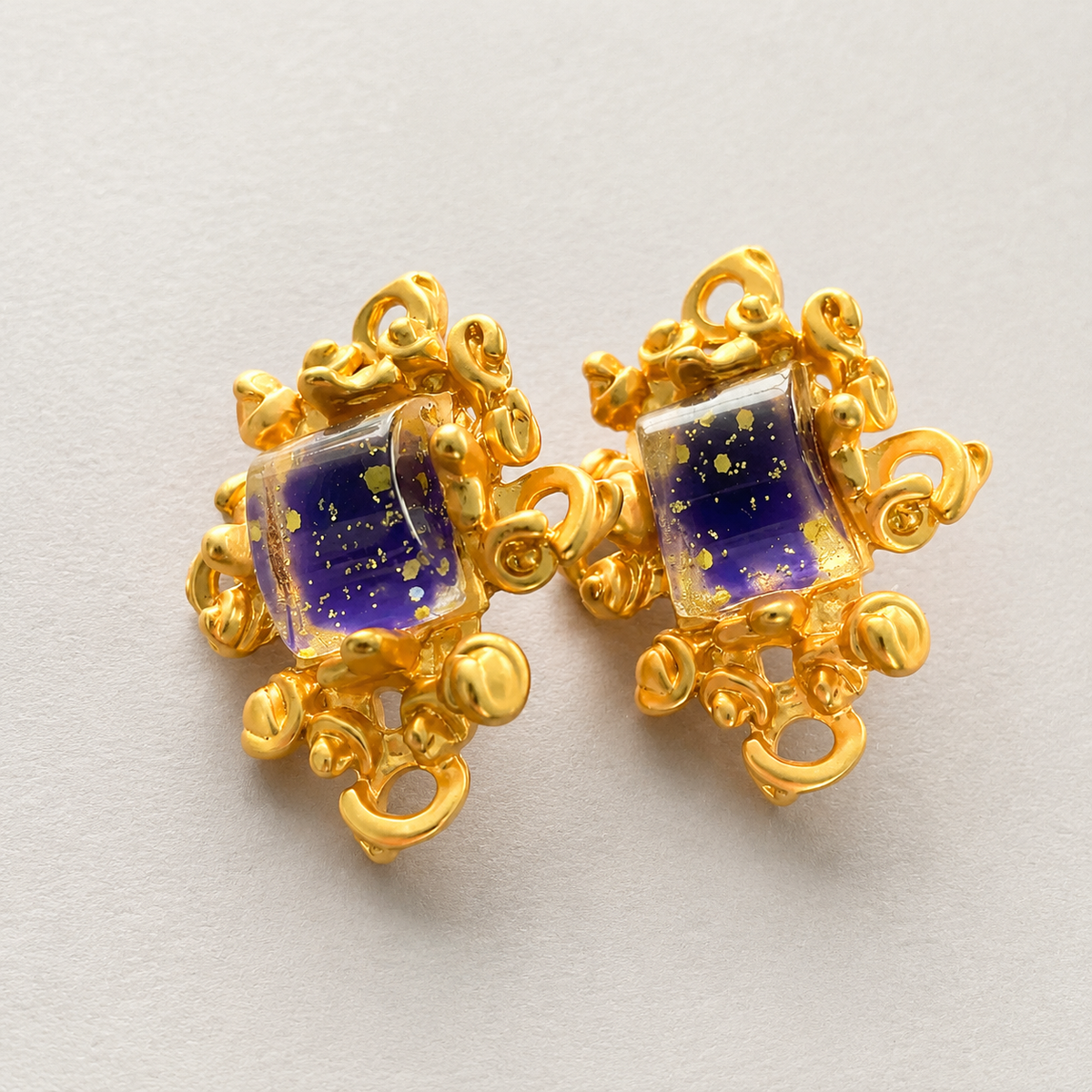
After losing one earring, ask the original seller about replacement options before buying a lookalike or another full pair. Find out whether the offer supplies one earring, exchanges the surviving piece for a new pair, or merely puts you on a request list.
Those are different purchases. The right choice depends on what is actually available, whether it matches the survivor and whether you are willing to send that survivor away.
Start with the original seller
If the loss is recent and the search is still open, use the separate missing-earring recovery guide first. Replacement shopping begins when you are ready to decide what to do if the second earring does not return.
Find the original product name and selected option from your receipt or order confirmation. Send the seller a clear photo of the survivor and ask whether a single replacement or lost-earring program exists for that design. A general assortment of single earrings is not necessarily a replacement service.
The original maker is a useful starting point because another seller's similar-looking ornament may have different proportions, color, orientation or hardware.
Ask what the replacement offer actually supplies
Three merchant pages reviewed on October 13, 2026, show why the answer matters:
- Julia Turner checks an archive of unmatched earrings from its own collection. If no match is available, a request can wait for a future spare; a match is not guaranteed.
- Kendra Scott's Half Earring Exchange offers an eligible in-stock new pair at half price when the surviving earring is brought to a retail store. Its FAQ excludes fine jewelry.
- The Mad Bohemian describes sending in the survivor for an eligible in-stock new pair at half retail price plus shipping.
These are those merchants' programs, not RJC offers. Confirm the current conditions with the original seller before mailing anything. The phrase “replace an earring” does not tell you whether you will receive a single piece or an entirely new pair.
A close color is not necessarily a matching partner
Before paying for a single, establish the selected color, fastening and intended relationship between the two earrings. A mirrored design may need the opposite-facing partner, while another design may repeat the same shape. Use our matched-pair guide for that comparison instead of assuming every pair has dedicated left and right pieces.
Also ask how the seller will assess the match. A photograph can help identify the design, but lighting and wear can complicate color comparison. If exact visual agreement is essential, clarify that before accepting an available substitute.
Compare the complete replacement commitment
A lower-priced single is not automatically the easier option. Consider the quoted purchase price, required shipping, whether the survivor must be surrendered and whether stock is confirmed. Keep a future request list separate from an order ready to fulfill.
If the earrings are needed for a particular event, do not build the outfit around an unconfirmed spare. Buying a complete pair may meet the wearing need more directly, even when it does not restore the original pair. Neither route guarantees that a new piece will duplicate an older finish.
Keep the fastening explicit when choosing another pair

This RJC statement-earring listing sells a pair and offers Stud and Clip-On options. The front design alone is not enough to choose between them. Select the fastening you actually want rather than treating the shared decorative appearance as proof.
The listing does not advertise a single-earring replacement. You can ask RJC about the exact design and option, but a support inquiry is not confirmation that one replacement is available.
Decide what you want to preserve
If preserving the original pair matters most, wait for a confirmed matching route rather than buying an approximate partner in a hurry. If having a complete pair to wear is the priority, compare ready-to-wear alternatives on their own merits.
You can keep the surviving earring without immediately modifying, selling or discarding it. Choosing another pair does not require pretending that the original one has been restored.