
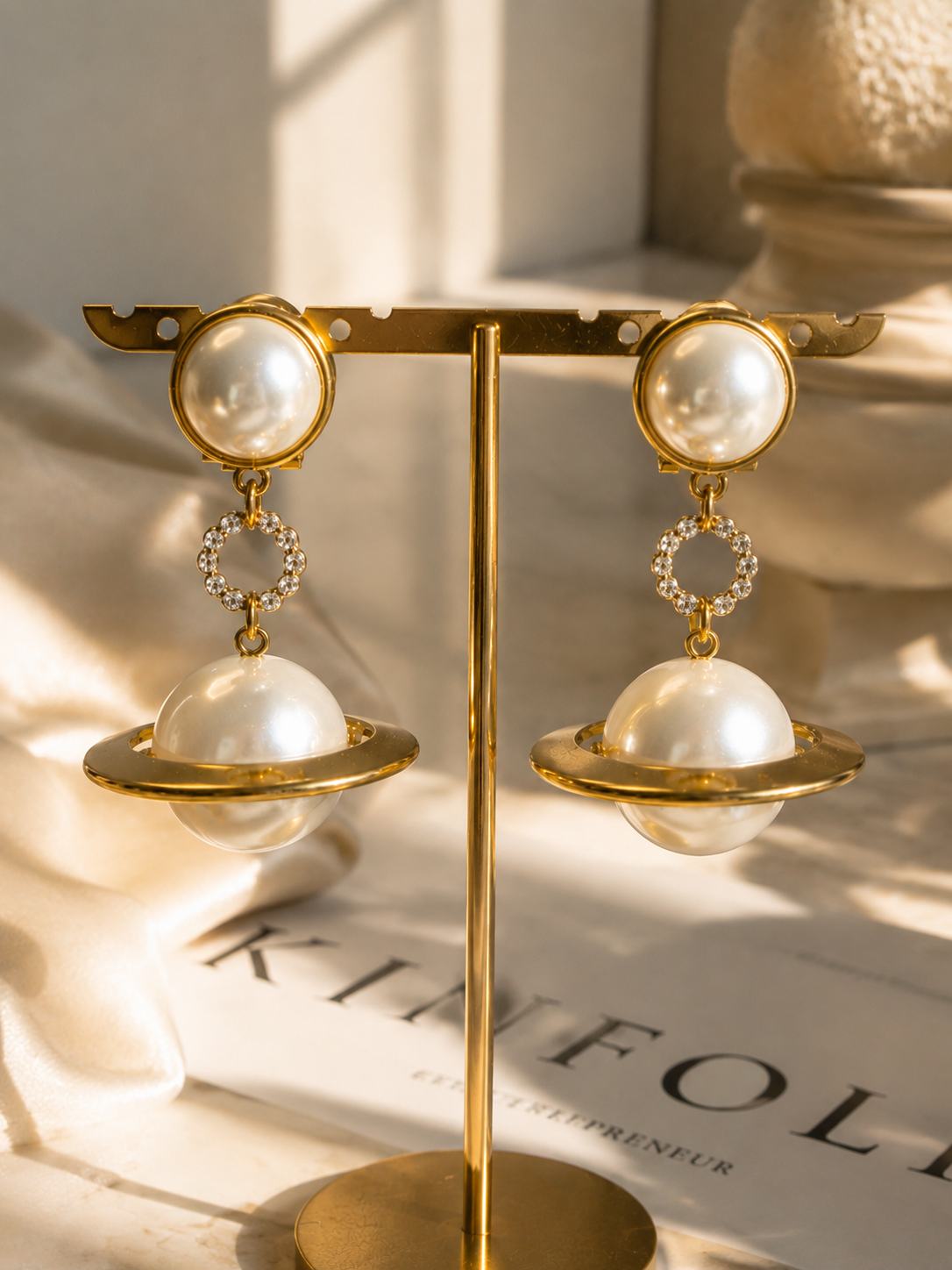
When one earring is missing at home, begin with the last occasion on which you can establish that both pieces were present—not the place where you usually keep them. Then trace any temporary separation or container change. The aim is to recover the right object without turning every similar earring or loose back into a presumed match.
Define what is missing before searching
Write one narrow description: the whole second earring, a documented removable back, or another identified part. Keep these separate. Finding a back does not recover a missing earring, and finding an earring does not establish that its original back came with it.
Use A and B for the two bodies if no left/right relationship is documented. Keep the surviving piece's identity unchanged. The matched-pair guide covers comparing identical, mirrored and intentionally different designs; you do not need to repeat that classification every time you search.
Establish the last complete return, with its evidence
Record when both bodies were last known to be back at home together and what supports that statement. A dated photograph is different from a person's recollection, and “I normally put them there” does not establish a particular return. If the exact time is unknown, record a date range or simply “after dinner; time unknown.”
The Smithsonian's family-documentation guidance includes object locations and photographs. For this recovery task, use an existing image as evidence of a specific state rather than assuming it depicts the last use. Preserve the original file and put your annotations on a copy.
| Recovery note | What to enter |
|---|---|
| Last complete return | Date or range, bodies present, supporting photo or named recollection |
| Later separation | Which piece, moved by whom, old and temporary container |
| First noticed absent | Where and when the absence was observed |
| Uncertainty | What nobody actually saw or recorded |
Reconstruct container changes, not just rooms
Here is a hypothetical case. A photograph shows E12-A and E12-B together in the blue tray on Sunday evening. On Monday, someone moves B into a small pouch while wiping the empty tray; they remember the action but not where they put the pouch. On Tuesday, only A is visible. The unexplained interval starts with the pouch movement, not with a claim that B was lost outdoors.
Ask household members about actions rather than blame: “Did anyone move the blue tray or the small pouch?” Record each answer with its source. Check the named containers and their known destinations before broadening the search. Mark a place as checked only after it was actually examined; a checked room does not mean every pouch inside it was opened.
The Canadian Conservation Institute's dissociation guidance explicitly addresses recovery by preserving records of separated objects and information. This household timeline is a practical adaptation, not a museum-certified search method or a promise of recovery.
Give a found object its own discovery record
Record where it was found, the date, who found it, and whether it was inside the expected container. Photograph it as found when practicable, then place it in a suitable separate container with that note. Do not label it E12-B merely because its color looks familiar.
Keep a loose fragment supported rather than holding the object by it; the CCI handling guidance explains why weak attachments need support. Do not push an unidentified back onto a post or glue a recovered accent into a gap. Check compatibility separately with the replacement-back guide; identifying a match does not establish that it is safe to reuse.
Compare a plausible lookalike with an established match
Lookalike: a pale round drop is found in an unrelated drawer. Its front resembles the missing piece, but its fastening differs and no record connects it to E12. Keep it as an unidentified candidate. The resemblance can narrow a search; it cannot close the case.
Established household match: the recorded pouch is recovered, its contents agree with the previous photographs and exact fastening, and the person who moved B confirms that this was the pouch used. Record those reasons when reuniting the pair. If several identical pieces could have been mixed together, retain that uncertainty instead.
The orbital earrings' selected Clip-On option illustrates why the original option belongs in the comparison. The front image does not show the clips, and a similar pierced version would not establish the same selected item.

Close the recovery note without erasing the gap
Finish with “unresolved,” “candidate found,” or “reunited on this evidence.” Keep the discovery location and temporary-container history even after recovery; they explain what happened. A recovered piece with damage still needs appropriate assessment before use.
Use the packing guide for basic separation and return-count routines. The earrings collection is only a design reference, not proof of a found object's identity. This recovery record succeeds when it explains why the piece belongs—or honestly preserves why that remains unknown.