
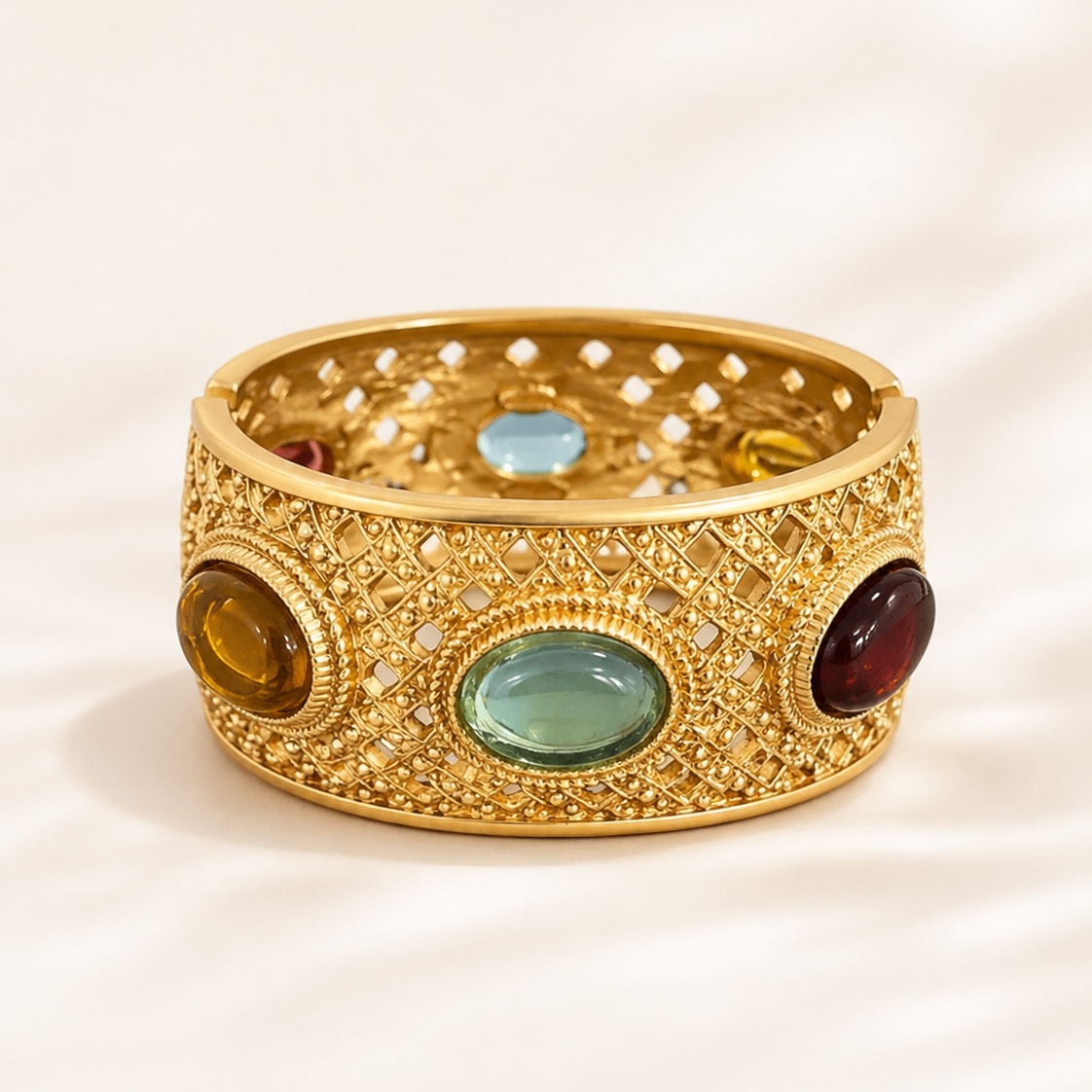
A paid finished-jewelry sample is worth considering when it can answer a question that would change your first wholesale purchase. Compare its full cost, any ordinary small-order alternative and the actual credit conditions before paying. Sampling is not automatically free, recoverable or necessary for every reorder—and one satisfactory piece does not guarantee every later unit.
Decide what the purchase needs to settle
Start with the reason you are hesitating. Perhaps the cuff's proportions are difficult to judge online, the clasp view is missing or an unfamiliar earring construction needs an in-hand review. Name the answer that would make you proceed, reduce the opening order or leave the line alone.
If the missing fact is a documented dimension, ask for it first. If the concern is material composition or a market-specific testing requirement, simply holding a piece does not establish the answer. An evaluation purchase should not become a substitute for evidence it cannot provide.
A selection chosen around unresolved questions gives the evaluation a clear job; buying one of every attractive design may spend more without resolving them. That is a method for limiting its scope, not a recommended sample quantity for every boutique.
Compare the actual sample arrangements
Supplier pages reviewed on October 13, 2026 describe different ways to evaluate jewelry. Clazoire's policy describes separately paid samples whose cost is not credited against later orders. Jewena's opened sample page presents ready-stock evaluation pieces as ordinary listed-price purchases plus shipping, rather than a separate quoted sampling service.
The 925E FAQ, displaying a May 21, 2026 update, describes a dedicated sample-order route with a service fee, shipping and insurance, a cap and exclusions from certain services and promotions. It also describes those sample orders as final sale.
Those are particular suppliers' published conditions, not industry entitlements or RJC terms. Nor do they determine any mandatory rights under applicable law. Ask which arrangement applies to the exact finished products you want to examine.
Count the evaluation expense honestly
Here is an entirely hypothetical offer, not a quotation from any supplier named here. Three evaluation units at $11 cost $33. Add $17 freight and a $10 service fee: the amount paid is $60.
Now imagine a separate written agreement that credits only the $33 merchandise amount against a qualifying later order. If that credit is actually applied, $60 − $33 = $27 of the evaluation outlay remains unrecovered. If no qualifying purchase follows, the full $60 remains paid. A conditional future credit is not a cash refund today.
Include the later order's own minimums, freight and other charges when deciding whether it fits. Buying unsuitable extra stock just to unlock a credit can create a larger commitment than the evaluation expense you hoped to recover. The example predicts neither sales nor avoided losses.
Give a disappointing sample a useful outcome
An evaluation can earn its place by supporting a decision not to buy. If the piece cannot meet an essential requirement, stop treating the opening order as the inevitable next step. Ask whether a documented alternative exists, or use the remaining buying budget elsewhere.
Keep a retailer's finished-product evaluation separate from commissioning a redesigned product. Paying to see a catalog item does not establish a right to demand changes, own the design or approve a future production run.
Keep a specific reference, not a blanket approval

If an evaluation purchase proceeds, preserve which exact item answered which question. The sample approval guide handles the narrower record of accepted, pending and unassessed features. It should not turn a favorable appearance review into a material or future-quality guarantee.
Ask about the route before assuming the benefit
A useful inquiry names the finished styles, the unresolved buying question and the intended opening assortment. Ask whether an evaluation purchase is available and what its complete cost and conditions would be. Confirm the selling unit and applicable minimums separately; the MOQ and case-pack comparison explains why a sample exception and a normal wholesale order are different questions.
For current RJC selections, ask about the exact products and proposed purchase. This article does not establish an RJC sample program, refundable or credited fee, single-unit wholesale privilege or manufacturing service.