
Wholesale jewelry lead time is not necessarily the time until the stock is ready to sell. Separate order acceptance, fulfillment, carrier transit, receiving, and inspection. Then work backward from the date your boutique needs the items available—not merely delivered at the door.
Ask what starts and ends the stated lead time
Does the clock start when an order is submitted, accepted, paid, or approved after customization? Does it end at packing, dispatch, or delivery? Ask the supplier to state those events.
Faire's lead-time definition refers to business days normally needed to fulfill an order after receipt and distinguishes that from an expected ship date. Another supplier may use different terminology, so confirm the meaning rather than borrowing a platform's definition.
Keep the stages in separate fields
| Stage | Evidence to request or record |
|---|---|
| Order accepted | Confirmed items, quantities, and acceptance date |
| Ready or dispatched | Current expected date and what it means |
| In transit | Carrier information after actual handoff |
| Received | Physical receipt and count |
| Sell-ready | Inspection, labels, product information, and availability completed |
A tracking number created is not the same as carrier acceptance. A parcel delivered is not proof that every ordered variant arrived correctly.

Build a hypothetical backward calendar
Suppose an event needs stock sell-ready on a chosen date. Work backward through your own receiving and inspection allowance, a documented transit estimate, and the supplier's confirmed fulfillment range. Mark every estimate as an estimate and use the appropriate calendar for each stage.
Do not subtract “ten business days” as ten calendar days. Supplier holidays, carrier schedules, and local receiving hours can differ. Where timing is critical, ask for a confirmed arrangement rather than adding an arbitrary buffer and calling it guaranteed.
Confirm the exact option
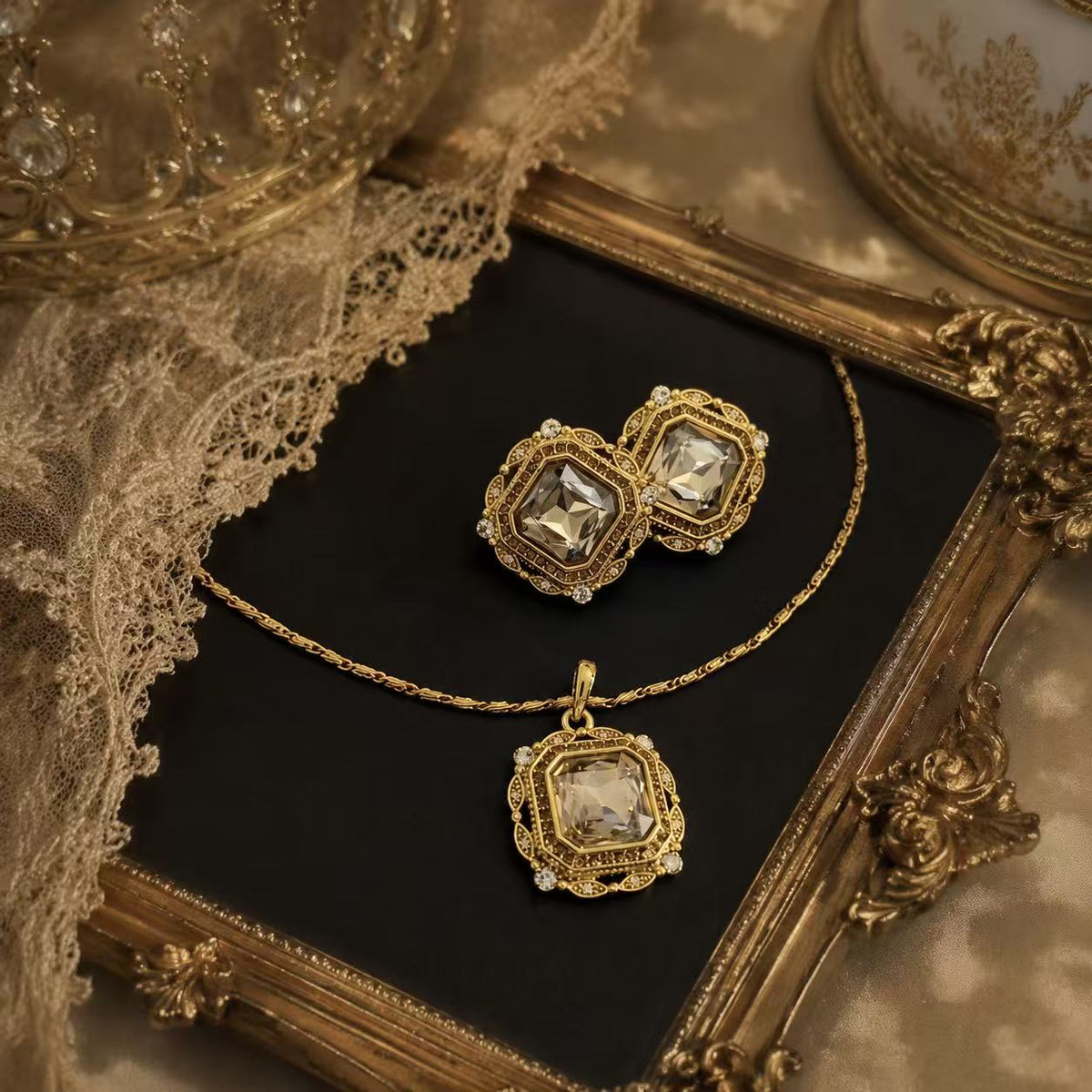
The pictured set includes a necklace and clip-on earrings in the current description. A similar design with a different fastening may have different availability. Record the product, selected option, selling unit, and quantity with the timing confirmation.
The purchase-order checklist helps preserve those details. Do not accept “the earrings” as sufficient identity when several options exist.
Send a lead-time inquiry with enough detail to answer
Give the supplier a specific buying plan. These details make it easier to discuss the timing for the actual order:
- Product links and the exact selected options, including the fastening where relevant.
- Desired quantities and selling units. State whether you mean individual pieces, pairs or sets, and ask the supplier to confirm the unit.
- Ship-to country or region, purchase currency, and a budget range identified as per unit or for the whole order.
- Your requested sell-ready date, with time reserved for receiving, inspection and labeling.
- A request to identify what starts the fulfillment clock, whether the quoted date means dispatch or arrival, and which dates still need confirmation.
Copy those details into a wholesale lead-time inquiry. Ask for the current options, availability and timing for the items you name; a catalog photograph or a general planning example does not confirm them.
Plan what happens if a stage changes
Agree who updates the expected dates and how substitutions, partial shipments, or delays are handled. Do not promise customers an event-ready date based only on an unconfirmed supplier estimate. If the timing no longer works, review the actual agreement before changing or canceling an order.
Use wholesale inquiries for current Rustic Jewel Co terms. This guide describes a planning method, not a published fulfillment or delivery guarantee.